Common Meditation Mistakes: 12 Things That Can Make Meditation Harder
Meditation can seem quite simple on the surface. Just sit down, close your eyes, and pay attention. But many meditators develop habits that don’t actually serve us in the long run. These aren’t serious problems, but places we can make adjustments. And, I’m speaking without judgement from experience as I’ve done (and still do) all of these at various points in my practice.
I’ve had this post on my list of to-do’s for almost a year. I struggled with the term “mistakes.” As you read this list, please do not beat yourself up. Each one of these is an opportunity to adjust your practice. Be grateful you are seeing your practice clearly.
It’s also important to note that I’m speaking from the tradition of insight meditation. These mistakes and tips are relevant to mindfulness meditation. If you practice meditation in another tradition or religion, these mistakes may not be mistakes!
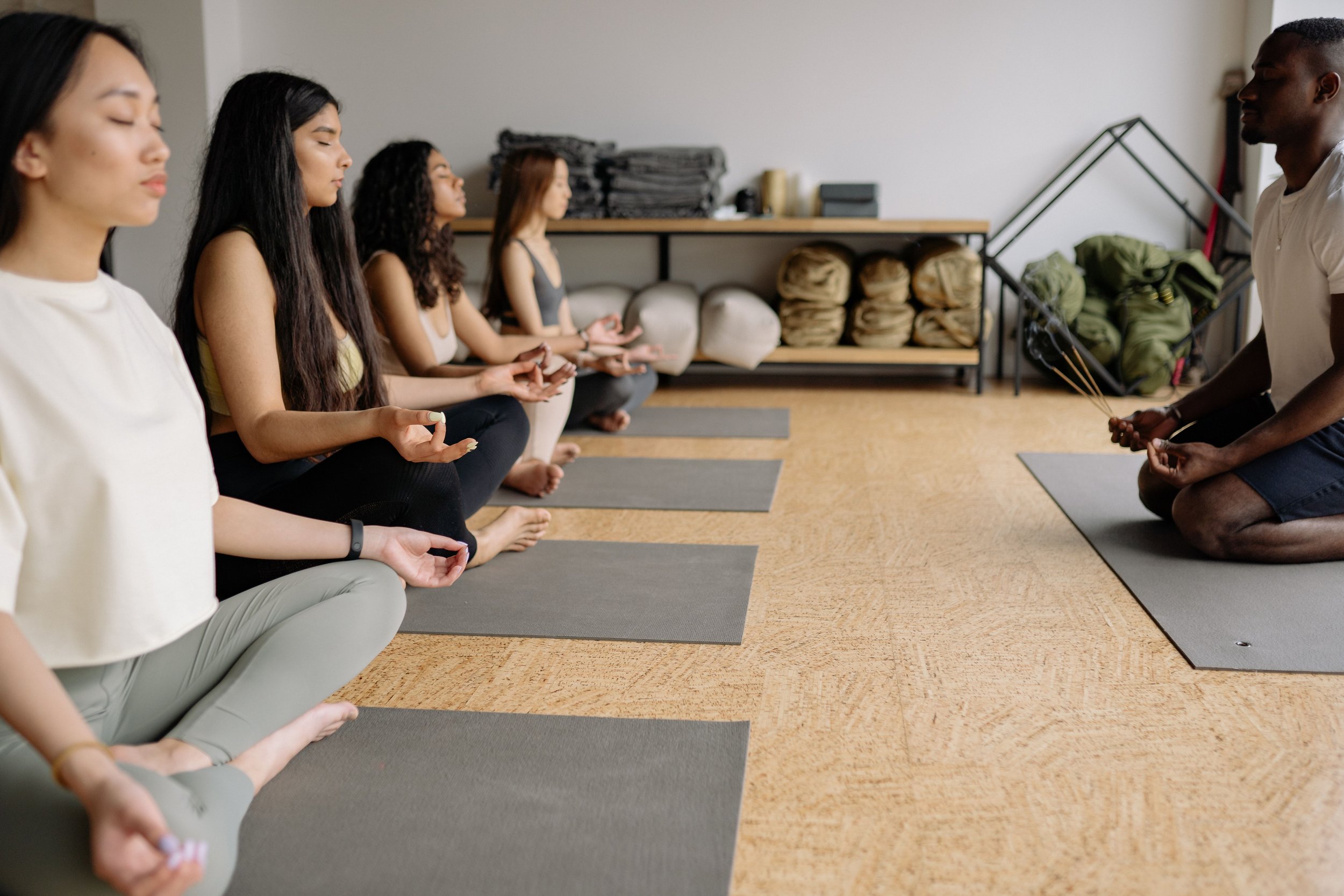
Common Issues in Meditation
These common mistakes make this list because they’re common! Again, don’t beat yourself up if you find yourself doing some or all of these. Be true to yourself, recognize where in your practice you may fall into some of these habits, and meet your experience with kindness and curiosity.
Trying Too Hard to Concentrate
This has to be the first on the list, as I believe it to be the chief reason that meditation feels hard at first for many people. Especially when people begin meditating, they have a tendency to try really hard to concentrate. The mind wanders off, and you grow frustrated that focus just isn’t coming.
Concentration meditation can certainly help with this, but it takes time. We must have some patience. Furthermore, the tension and straining is actually counterproductive. As we practice with this tension, we are not able to see the experience clearly or learn from it. The tension itself becomes the issue, not the uncollected mind.
My recommendation is to watch for this straining and over-efforting in your practice. Watch it arise, know how it feels, and understand what’s happening. Be curious when you see it present. If you can, lighten your effort a bit and relax the body. When we release tension in the body, it can help release tension in the mind as well.
Below is a video from my playlist Mindfulness for Beginners offering some tips for cultivating a more concentrated and collected mind. I encourage you to watch and incorporate these practices into your meditation sessions rather than trying to over-effort your way into a settled mind.
Pushing Thoughts Away
On a similar note, many meditators habitually try to stop thinking during meditation. This comes from silly instructions like, “clear your mind,” or ”let go of all thoughts.” To be honest, I’m shocked at how many meditations I’ve listened to that start with instructions like this. If you could clear your mind so easily on command, that’d be quite the skill! You probably wouldn’t be spending your time meditating.
First, you absolutely do not have to clear your mind to meditate. If you’re going to let go of anything, let go of that idea. Thinking is a normal function of the mind. Yes, in deeper states of meditation (such as the jhanas), discursive thought largely falls away. But unless you are training specifically in this practice, thinking happens.
Instead of resisting them, we can learn to observe thoughts without judgement. What if we view the thinking mind as a part of our practice, and not an obstacle? In fact, watching the thoughts and thinking mind can offer great insight into our experience. We learn the habits and patterns of the mind, see how the mind constructs experience, and can grow to take thoughts less personally.
I have taught quite a bit about mindfulness of thoughts, as it’s an important practice. Below is a recording from our Thursday Morning Meditation group. It starts with a guided meditation working with the thinking mind, and then we discuss mindfulness of thoughts a bit more.
Beating Yourself Up and Judging
Again, you can see how this one relates to the other two a bit. How do we respond when the mind does wander? Or when thoughts arise? What about when we experience monkey mind and just can’t seem to concentrate? Even if it isn’t explicit, we often beat ourselves up or judge ourselves in these moments. This is a hard habit to break.
We can practice some self-compassion in these moments and stop beating ourselves up. I’ve included a short self-compassion practice below from my Two Minute Mindfulness practices. This is a practice you can do any time, including during other meditation periods when you notice this judging mind arising.
As we recognize this habit of the mind and respond with mindfulness and compassion, we get to know how and why the mind does this. Over time, we develop understanding and wisdom, enabling us to begin speaking more kindly to ourselves. The moments where we once beat ourselves up become just more experiences to observe and learn from.
Trying to Avoid Unpleasantness
I actually talked about this in an Instagram post a few months ago. Although we may associate meditation with pleasant feelings and lovely, serene states, it just isn’t always this way. If we’re practicing open awareness meditation, we’re bound to come into contact with unpleasant experiences. It’s part of life, and therefore part of meditation.
When we try to avoid every unpleasant experience in meditation, we’re meeting experience with aversion. This clouds the mind and prevents us from clear seeing, or clear comprehension. In order to cultivate mindfulness of unpleasant experiences, we have to actually come into contact with them! Whether it’s an unpleasant sensation in the body like pain or an itch, an unpleasant thought related to anger or anxiety, or unpleasant sounds, we simply cannot avoid them. Every time we push these experiences away, we feed the seeds of aversion rather than the seeds of mindfulness.
When you do notice something unpleasant present in your meditation experience, observe it. How does the mind respond? The mind often experiences aversion and resistance when unpleasant experiences arise. Can you tune into this and see this happening? Bring curiosity and interest to the experience. Get to know what the mind does when unpleasant experiences arise.
Chasing Pleasant Experiences
The flip side of the same coin is chasing pleasant experiences. Yes, meditation can produce some pleasant sensations and mental experiences. But the reality of what meditation feels like is mixed. It’s not all pleasant, and clinging to the idea that meditation should be only pleasant is harmful. We think we’re meditating incorrectly if we’re having pain or difficulty, feed craving and clinging, and don’t see clearly.
The Buddha taught that attachment is the root of all suffering, and attaching to pleasant experiences is no exception. Yes, we can work toward more wholesome states, but we must do so without chasing or craving. I’ve found in my own practice then when the mind is focused on these pleasant states, there isn’t much awareness of what’s actually present here and now.
Just like you might do with the aversion to unpleasant experiences, you can notice the clinging and craving with pleasant ones. Feel into the experience of wanting. Notice the mind that craves certain states. Be present with the experience of chasing pleasant experiences when it’s present. The problem or mistake here isn’t chasing pleasant experiences entirely; it’s chasing them without any mindfulness.

Lacking Patience in Practice
We all come to meditation practice for some reason. Maybe it’s to deal with some stress and anxiety, or perhaps just to learn about the mind. However we arrive here, meditation can take time to work. We have to make space for the practice to work in us, and continue practicing. I talk with so many students who are struggling with meditation after a week or two and not seeing the results they want.
Have some patience with the practice and with yourself. Keep going. Don’t check in with yourself every day or week to see if the practice is working. Yes, we sometimes feel benefits of meditation immediately after a session. But the more life-changing benefits come with repeated practice.
Furthermore, we can’t expect to really know the mind or experience from just one or two sessions. Think about doing a word search puzzle. We don’t give it one look and find every word. It takes time, patience, and repetition. Understanding the mind and changing habits is like this. We must look repeatedly and train the mind continuously to make changes.
Overanalyzing
This is one I find myself doing, and most of my mindfulness coaching students as well. It’s a tricky one because there is a quality in Buddhism known as investigation (dhammavicaya). We are called to investigate experience in order to understand. But when does this investigation become overanalyzing and unhelpful?
Overanalyzing is a bit of a vague term. It can arise in numerous ways. You might wonder if you’re meditating correctly, try to pick apart one experience excessively, or go over teachings in your head while meditating. The difference between overanalyzing and mindful investigation lies in the position of awareness. With overanalyzing, we get caught inside the looped thinking. With investigation, there’s some space as we watch the nature of experience itself.
You probably know what I’m going to say at this point. When you notice the mind falling into this overanalyzing, watch it! You can switch from overanalyzing to mindfully investigating simply by taking a mental step back and observing what’s happening in the mind. Get to know this thought process and mental state. Check for craving in the mind. I frequently find there’s a deep craving to understand or “fix” something in these moments personally.
Sitting for Too Long
For some reason, many meditators prioritize longer sitting periods than is truly useful to them. Yes, longer periods offer different hindrances to deal with and can help us see clearly as the mind collects itself. But for many, longer sits actually just cause more suffering and difficulty. We lose focus during meditation, deal with physical pain, and often just feed craving and clinging.
As I cover in my post For How Long Should Beginners Meditate?, we really don’t need to sit for very long when starting our meditation practice. Just a few minutes a day can help us build the habit and get the ball of mindfulness rolling. In my experience teaching meditation for 15+ years, new meditators tend to sit for too long more often than not long enough.
Try shortening your sits. This is a simple solution. Instead of sitting for a half hour, sit for five, ten, or fifteen minutes. Make meditation accessible. This was the idea behind my Month of Mindfulness. It’s a free program that aims to help individuals build a regular meditation practice with just 3-6 minutes a day. Don’t overdo it!

Avoiding Difficult Emotions
This goes hand-in-hand with resisting unpleasant experiences. But more specifically, I see many meditators use meditation to avoid difficult emotions altogether. When we experience a moment of sadness, grief, anger, anxiety, or pain, meditation is not the way to stop from feeling that feeling. In fact, meditation is the way to fully feel that feeling!
For example, if we’re experiencing anger, mindfulness calls for us to actually know the feeling and experience. We don’t meditate to free ourselves from feeling the feeling. We meditate to understand, feel, and change the relationship to experience. If you are going into meditation to avoid some emotional experience, you are cultivating aversion.
Below is a good example of this. It’s a meditation for anger that focuses on truly tuning into the experience. Rather than pushing the anger away or just focusing on the breath and pretending it isn’t there, we turn toward it. We can do this with other emotional experiences as well. If the emotion feels too strong, don’t forget you can always turn toward self-compassion.
Becoming Too Rigid About Technique
I call this mistake becoming too rigid about technique, but really it could be becoming too rigid about anything! I find that many people get stuck on specific instructions from teachers, suttas, or guided meditations. Yes, teachings are presented in a specific way for a reason. But if we cling too intensely to following these instructions perfectly, we’re both setting ourselves up for disappointment and cultivating attachment.
There are many types of meditation. And even with one type, there are many ways to practice! I actually covered this in my recent podcast series How They Meditate. The point is that we need not get stuck on one practice or technique. Know the instructions, but allow some gentleness. Watch for the clinging or fixating on doing it “right.”
Practicing Only on the Cushion
If you’re a regular reader of this blog, or my blogs over at One Mind Dharma, you know I’m going to mention this. Yes, formal meditation is done on a cushion. But it’s a huge mistake to think the practice ends when the bell rings. The bell is just a change in how we practice, not IF we practice or not.
There are many ways to cultivate mindfulness in everyday life. When we work to practice mindfulness and compassion in our lives the transition to meditation becomes easier, we find continuity with practice (more on this in a bit), and we give ourselves more opportunities to grow.
There are many ways to practice off the cushion. We can practice forms of moving meditation such as qigong, yoga, or walking meditation. We also can mindfully wash the dishes, drive, or play with our children. As I discuss in this post, don’t just jump up when the bell rings. Pause and make the transition into daily life intentional. Below is a practice from my playlist of 10 Minute Guided Meditations you can use to investigate walking meditation.
Treating Meditation as Something to Accomplish
One of the thing I see with my dharma mentoring students is this accomplishment/attainment attitude. This is common in many cultures, and certainly in the Western society I’ve lived in my whole life. It can be a hard habit to drop as its deeply engrained. We treat meditation as a productivity goal.
This gives us this idea we can “achieve” mindfulness. It also leads to comparison with ourselves and others, guilt when we miss a day, and tying our value to the success of our practice. This is an attitude about meditation that generally is rooted in attachment and striving. If you find yourself tracking streaks, comparing your meditation to others, or feeling guilty when you miss a day, it may be time to investigate your relationship to meditation.

Making the Most in Practice
I can offer countless meditation tips, but a huge list of tips doesn’t necessarily create the most interesting read. In order to learn to slow down and be more mindful, I have a few points I want to share about kindness, understanding, consistency, and sangha.
Incorporating Kindness
Any type of meditation needs some kindness incorporated. Ajahn Brahm uses the term “kindfulness” to describe his approach. According to him, mindfulness should be imbued with friendliness and loving-kindness. I agree completely. We often are far too stiff in our practice, and this gentleness is important in practice.
You might try some loving-kindness practice, like the one below from our Five Minute Meditations. You also might just try being a bit kinder in your mindfulness practice. You might investigate meditating while lying down, not setting a timer, or starting your meditation period with some loving-kindness (like I do!).
Make kindness a part of whatever practice you’re doing. Softening helps us immensely. This gentleness can help us become less reactive, see more clearly, and have more compassion and patience in the face of difficulties.
Being Clear About What We’re Doing
Many people reach out to me about meditation, but don’t really know what they’re doing. The question, “What should I be doing exactly in meditation?” is one of the most common questions I receive via email. It’s a great question to ask a teacher, and one that shows curiosity and interest. There’s no shame in not knowing, and asking is a wholesome act!
Understanding the purpose of meditation, the techniques, and the teachings can help you know what exactly you’re doing in meditation. For example, did you know that the Buddha taught the point of mindfulness is to deeply understand the Three Marks of Existence in order to experience nonattachment and liberation? Many new meditators aren’t ever taught this.
Whatever tradition or practice you’re doing, learn what you can about it off the cushion. Read, listen to talks, ask a teacher questions, and do what you can. Of course this learning doesn’t substitute for actual experiential wisdom though, so don’t forget to put it into practice.
The Role of Consistency
This is something I had heard repeatedly in my practice, and it was the teachings of Burmese monk Sayadaw U Tejaniya that really helped me. Consistency and continuity in practice truly is your best friend. Regular practice helps us make mindfulness a part of life off the cushion, gives us depth to practice, and helps make it a habit.
Research into meditation app users actually found that frequency was a better indicator of long-term habit building with meditation than total minutes meditated. Put energy forth to practice every day, even if only for a few minutes. I know it can be hard to find the time to meditate, but set aside just 5 minutes before bed or whenever you can. You can also check out my post How to Meditate Daily: Tips and Guidance for Beginners for more thoughts on this matter.
Practicing with a Community
Finally, don’t do it alone. One of the simplest ways to find community with your practice is to see if you have any friends or family members who want to meditate with you. They don’t need to physically be there with you meditating, but having a meditation buddy offers the opportunity to talk about your practice, learn from each other, and incorporate mindfulness into your social life.
In Buddhism, the community is known as the sangha. It’s one of the Three Refuges, and an important part of the practice. Although meditation is often seen as an internal practice, engaging with a community is essential. Connecting with a community can help our practice immensely in many ways.
If you don’t have a nearby meditation community or someone to practice with, that’s okay! We have online meditation classes that are completely donation-based. You also can check out this page for some other online meditation groups I recommend. And if nothing else, we have an amazing WhatsApp group that offers a digital mindfulness community to people around the world. Below is a video from my podcast covering the importance of community on the path.
More Posts


Matthew Sockolov is a Buddhist meditation teacher who trained at Spirit Rock Meditation Center in Woodacre, California. Completing the Dharma Leader training program in 2017, Matthew was given power to teach in the Insight Meditation tradition by Jack Kornfield, Kittisaro, Thanissara, and others. You can learn more about Matthew here.