Sangha: The Importance of Community Practice
When we think of meditation practice or Buddhism, we often think of it as a solitary practice. Although there is much work to be done within ourselves, Buddhist teachings have held community as an essential part of the practice for millenia.
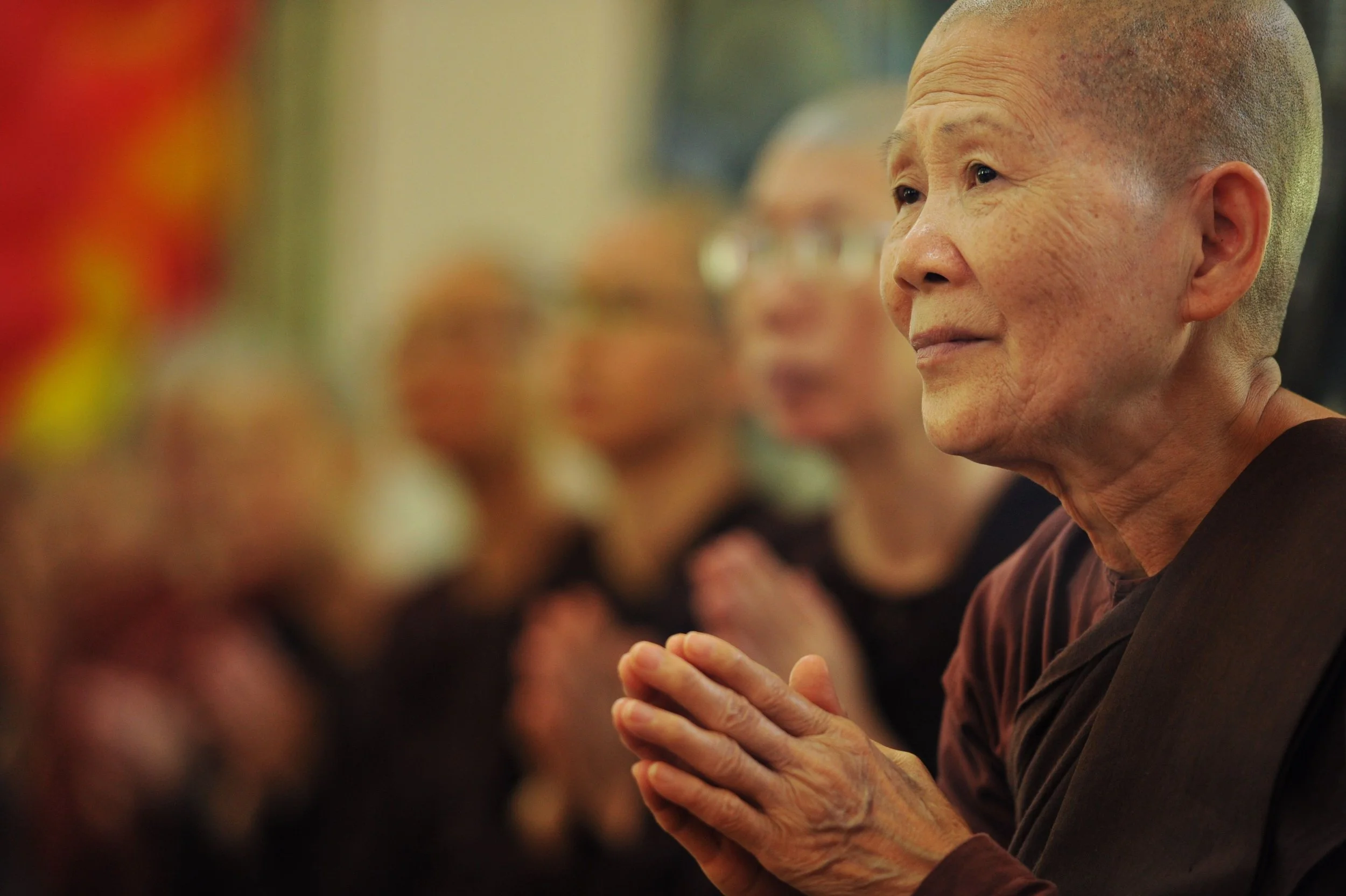
Traditionally referring to the community of monastics, sangha is the Pali term for community. It’s one of the Three Jewels of Buddhism, and more than just an idea. Sangha is an actual practice, a way to engage with the world and community.
We’ll cover the traditional teachings on community, the benefits of sangha (with a look at modern research surrounding community), how it may look in the Western and modern world, and how to find a sangha that supports your path.
Understanding Sangha in Buddhism
In simplest terms, sangha refers to community or assembly. Traditionally it referes to the ordained monks and nuns. In a more general sense it can refer to laypeople as well and communities of practicioners. The word itself comes from the roots sam- (together, with) and han- (to bind). At its root, it means something held together by strong bonds.
It was a term that applied to guilds and political assemblies in the republics of early India. The Buddhist community adopted the term to apply to the community of bhikkhus and bhikkhunis (monks and nuns).
As a Refuge
Together with the Buddha and Dhamma, Sangha is one of the Three Jewels (or Three Refuges). The Jewels are three things Buddhists “take refuge” in. In one sense, they are the commitments that traditionally make one a Buddhist. In many traditions, “becoming Buddhist” involves formally taking refuge in the Jewels. For those interested in how to practice Buddhism, taking refuge is a great place to start.
You may think of a refuge as a place you seek safety. In the case of Buddhism, a refuge is safety from dukkha. Taking refuge means we orient ourselves toward something, and Buddhists will often renew their commitment to the Jewels daily.
As one of the Three Jewels, we take refuge in sangha by engaging with a community, seeking the wisdom of the greater community of practicioners, and supporting the community with our own actions. This is a reminder that it is indeed not a solo practice, and we are called to turn toward a community to find freedom from suffering.
Sangha as a Practice
Sangha can be viewed just as a community, and this is somewhat accurate. But it isn’t just a fixed idea or external thing. It is an engaged practice. We seek refuge in the sangha not by simply meditating with a group of other people, but by truly engaging.
We have the opportunity to practice generosity, compassion, mindful listening, and many other forms of relational mindfulness. Just as we support the community with our practice, the community supports us. The next section covers the benefits of sangha, but in order to truly experience these benefits we must actively engage with the community.

The Benefits of Sangha
There are many benefits of engaging with a sangha. When I was new to meditation, I remember that practicing in a group simply helped me get through a thirty-minute sit without giving up. Largely due to my ego, I sat very still and quietly through the guided meditations despite wanting to crawl out of my skin in moments.
Consistency
In a study of almost 1,000 people, researchers looked at various factors to investigate what led to consistency in meditation practice. One of the findings from this study was that those who had social accountability and practiced with community were significantly more likely to practice regularly.
Practicing with a sangha helps us with consistency in many ways. Most notably, we meditate every time we show up to that temple or online meditation group. By incorporating time with community into your schedule, you are schedule consistency when it comes to your practice. And as I cover in my post here, consistency is one of the most important factors when it comes to creating a habit and finding the benefits of meditation.
Mutual Learning
Just last week in our online group, there was a beautiful interaction. One participant asked a question that I believe was directed at me as the teacher. With the person’s permission, I asked other participants if anyone else had a similar experience and what they find to be useful. What unfolded were a series of lovely shares about similar experiences and what people do to work with the experience.
Research shows we can truly learn from each other as much as teachers when it comes to engaging with a meditation community. Although working with a teacher or listening to a meditation podcast is great, the group dynamic can offer us different voices, perspectives, and lessons. We also can of course offer our experience to others as an act of generosity and compassion.
Emotional Support
I simply can’t cover all the research in this post about how community offers emotional support. One study found that simply hearing others say, “I also struggle with this,” was enough to reduce self-criticism and provide some emotional relief. The spiritual and emotional support offered in community can make a huge difference in our practice.
Whether you are struggling in a specific moment or just find the connection to be fulfilling, a sangha gives emotional support to any engaged participants. Especially when we feel lonely or are struggling in some way, the compassion of a community and shared experience can be both validating and soothing.
Engaged Practices
Practicing with a sangha gives us plenty of opportunity to incorporate our practice into interrelational aspects of our life. Where we may find it difficult at first to be mindful and compassionate in a social situation like a party or at work, the mindfulness-based sangha offers a great chance to really investigate how we engage with our practice.
By engaging with a community, we learn to be mindful of others, practice mindful listening, engage with compassion, and much more. It’s a practice; we’re not expected to be perfect. It is through engaging mindfully with a sangha that we actually cultivate these qualities and skills.
Spiritual Friendship
One of the oldest collection of the Buddha’s teachings is the Dhammapada. Verse 206 reads:
It’s good to see the noble ones;
their company is always a delight.
Free from the sight of fools,
one would be constantly happy.
It’s important to note that the word “fools” in English can seem harsh. What it actually refers to is someone who hasn’t cultivated mindfulness and acts out of ignorance and craving. There are many verses in the Dhammapada that stress the importance of spiritual friendship.
This isn’t to say we should avoid or shun non-practicioners in any way. But it is to say that spending time with other practicioners is beneficial. We can share honestly and openly, and receive feedback in language that we understand. There’s also ample research showing our peers impact our personality, perspective, and beliefs.
Practicing Generosity
Whether you are sitting with a lay community or monastic community, practicing with a sangha is an important way to practice generosity, one of the Ten Perfections. We practice generosity by donating money to the community to support it, by showing up and listening, by offering our experience, and by meeting others with compassion.
Anxiety, Depression, and Stress
Multiple studies (such as this one from 2023 and this one from 2026) have found that having a cohesive community can build psychological resilience and lessen symptoms of depression, anxiety, and stress. The simple, yet profound feeling of belonging goes a long way when it comes to mental health and spiritual wellness.

What Sangha Looks Like in the Modern World
In the most traditional Buddhist sense, sangha did originally refer to the community of monastics. The Buddha also spoke of the “Noble Sangha” and the Sangha of Disciples. But the actual term sangha was most commonly used to refer to the monks and nuns who had ordained.
In the modern world, sangha can be found in many places. There are countless meditation centers for laypeople, temples, monasteries, retreat centers, sitting groups, dharma consult groups, and simple informal groups of friends that practice together. I think it’s important to not get stuck on sangha as one thing only, but the broader community of practicioners.
How to Find (or Build) a Sangha
I know it can be hard to find a community. I don’t think there’s a topic I receive more emails about here or to our Buddhist website One Mind Dharma. So many people are looking for a community. It can require some patience to find your sangha. Here are a few recommendations:
Try Various Communities
There are plenty of different kinds of mindfulness and Buddhism. You may not have a ton of options in your area, but try to check out different options. When I lived in Southern California, I went to Against the Stream (insight meditation), InsightLA (insight meditation), Wat Metta (Kammathana/Thai Forest Tradition), Shambala (Tibetan Buddhism), Deer Park (Engaged Zen), and Vipassana (Goenka-style insight meditation). Don’t be afraid to try out the options.
Look Online
For many people, finding a local sangha is difficult. Technology surely has its problems, but it also offers a powerful solution here. We of course have our weekly sitting group, and I’ve seen a beautiful sangha arise. People come and go, some are regulars for a while, and there’s a real sense of community. New people are welcomed, we learn from each other, and I see us grow together.
If our style isn’t for you or the time doesn’t work, don’t worry. I put together this directory of online meditation groups in an effort to make online sanghas accessible. I put the most up-to-date information that I could find, and I know (personally, or have practiced with) the teachers and organizations on the list.
Reach Out for Support
I am here to help you find a sangha if you’d like. You’re absolutely welcome to email me at the bottom of this post. Let me know where in the world you are, any specifics of what you’re looking for, and I will do my best to find some options I can recommend. You can also reach me via WhatsApp at +1 415 858-5586, or by clicking this link.
Start a Sitting Group
This may seem crazy, but you can also start your own little sitting group! I have several students that sit at home with some friends and family once a week. They find a meditation on YouTube or a podcast (may I gently recommend our lovely podcast?), sit together, and have a discussion. You don’t need a teacher present to engage with community!

Matthew Sockolov is a Buddhist meditation teacher who trained at Spirit Rock Meditation Center in Woodacre, California. Completing the Dharma Leader training program in 2017, Matthew was given power to teach in the Insight Meditation tradition by Jack Kornfield, Kittisaro, Thanissara, and others. You can learn more about Matthew here.