Observing Thoughts Without Judgement: Mindfulness of the Mind
The idea of observing thoughts without judgement is a common theme found in mindfulness meditation, Buddhism, and many therapeutic modalities. It’s a great idea, but what does it actually look like and how do we work toward it?
Cuiltivating the ability to observe thoughts without judgement gives us an opportunity to see the mind in a new way and change our relationships to the thoughts. We put space between ourselves and the thoughts, and can work to break cycles of anxiety, overthinking, reactivity, and attachment to the thoughts.
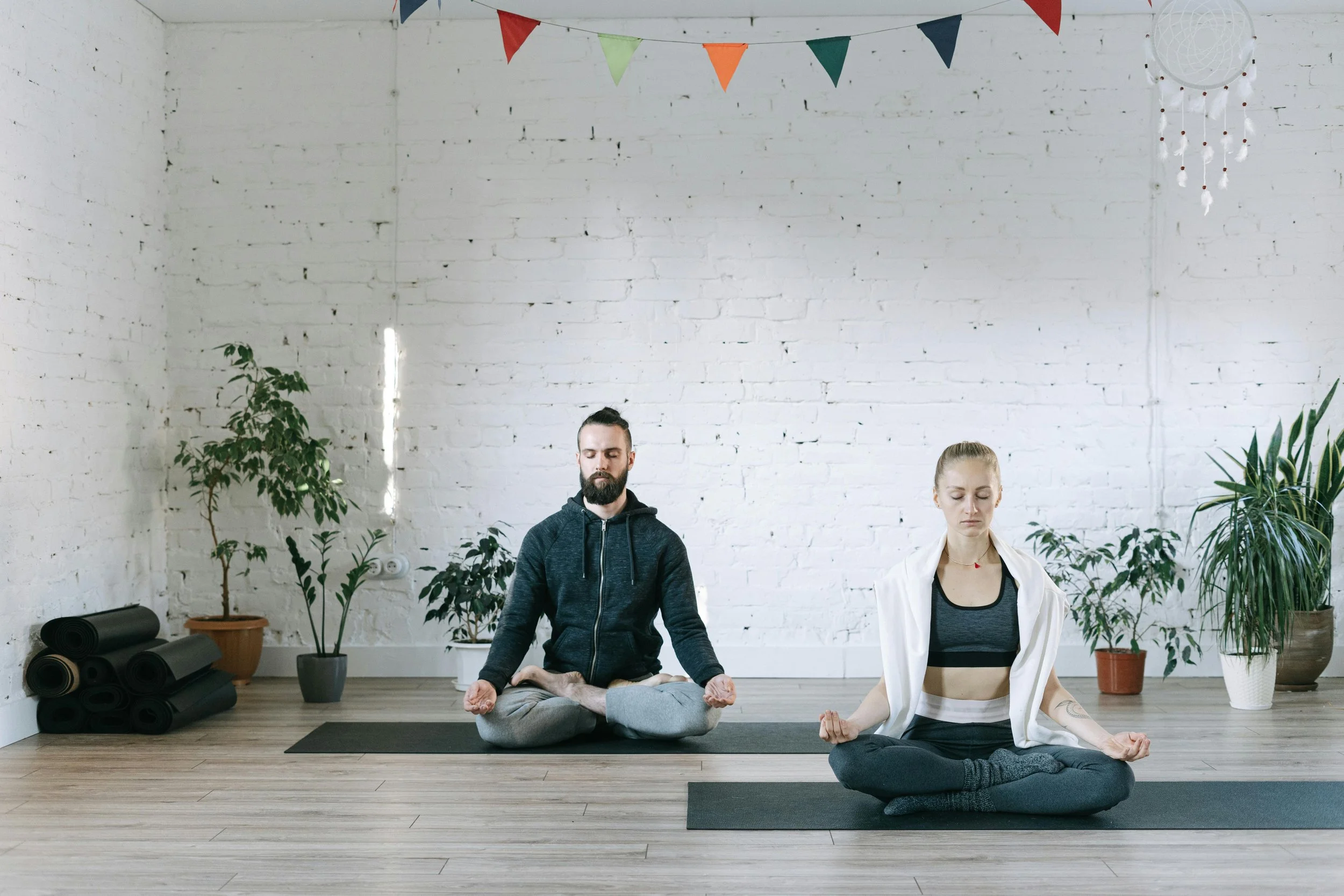
What is Nonjudgemental Awareness?
Learning to observe thoughts is a crucial part of mindfulness, and can be beneficial outside the context of meditation. At its simplest, nonjudgemental awareness of the thoughts is observing the thinking rather than being stuck in the thinking. Imagine watching the waves at sea compared to being in the water.
Observing the thoughts does not mean we stop thinking. It’s one of the most common misconceptions about meditation that we should stop all thinking. Instead, what is called for is an observation. We let go of labeling thoughts as good or bad, and instead simply observe the thoughts arising and passing.
I also would mention that nonjudgemental awareness doesn’t mean we don’t have some discernment. Judgement is labeling something as good or bad or right or wrong. Discernment is recognizing that this is a thought loop we’ve created or that we’re experiencing anxiety. We can recognize a thought’s usefulness without judging it as bad or wrong.
In Psychology
There are a few principles in secular psychology that address this head-on. One comes from acceptance and commitment therapy (ACT) and is known as cognitive defusion. This is a technique that aims to create some distance from difficult thoughts and emotions rather than identifying with them. We do so through recognizing the impermanent nature of the thoughts, noting that they are fleeting events of the mind.
In mindfulness-based cognitive therapy (MBCT), there is a stress on metacognitive awareness. This is the conscious monitoring and regulation of one’s thoughts, sometimes described as “thinking about thinking.” With metacognitive awareness we work to recognize the thoughts arising, evaluate how they are serving us, and knowing what thought patterns work in general.
Finally, there is the concept of decentering in cognitive behavioral therapy (CBT). This is the process of stepping back from things like thoughts to seek a more objective view. The idea is that we reduce reactivity by looking at the experience with less stories, judgements, and opinions. We step back to understand the event with more clarity and less reactivity.
In Buddhism
From a Buddhist perspective, the mind is just another sense-door. In the West we traditionally recognize the five senses, but Buddhist tradition holds the mind as the sixth. We can practice mindfulness of the mind just as we might be mindful of a feeling in the body or something we see. And, regardless of what we are observing, we aim to do so without clinging or aversion.
In order to cultivate this state of non-clinging and non-aversion, the traditional teaching is that we are to truly know the impermanent nature of something. In this case, we are called to know the impermanent nature of the mental states and thoughts. Rather than simply understanding intellectually that thoughts are impermanent, we are instructed to actually tune into the fleeting nature of thoughts to know it experientially.
This leads to a lack of attaching to thoughts and aversion from them. We rest in some equanimity, watching the thoughts arise and pass like we might do with sounds arising in meditation. I talk about this more in this episode of my podcast on the Third Foundation of Mindfulness.

Practicing in Meditation
So, how do we actually work toward this goal of nonjudgementally observing the thinking mind? The truth is that it takes practice. We’re not going to master this new skill in one or two periods of sitting. Here are a few things you can incorporate into your practice to help support nonjudgemental awareness of thoughts.
Concentrative Meditation
One of the core pieces of meditation practice is building concentration. Concentration is the ability of the mind to remain collected on one object without distraction, such as the breath during a breath counting meditation. When we are concentrated, things like thoughts don’t have quite enough power to pull our attention away. This doesn’t mean we push away the thoughts, and we don’t have to clear our minds to meditate.
Instead, concentration can be thought of as the ability to leave thoughts be. We can allow thoughts to arise and pass without getting fully hooked into them. Of course this takes time, but is a great skill to learn when it comes to meditation. I’ve written about the differences between mindfulness and concentration, and how the two qualities work together nicely here.
Mindfulness of Mind
Practicing with mindfulness of the mind is probably the most direct way to face thoughts and learn to observe them without judgement. This practice can be difficult at first for many beginners to meditation, but it truly offers a powerful way to face the thoughts head-on. Over time, we grow able to see the thoughts more clearly and deeply, recognizing impermanence and releasing attachment. We stop taking thoughts as true, and begin to truly observe.
There are many different ways to work with mindfulness of the mind. We can observe the thoughts themselves, the overall mental state, or the mind. The thoughts are fairly obvious. We watch the individual thoughts arise and pass, tuning into the fleeting nature. It’s normal to think during meditation, and mindfulness of thinking helps us build a healthier relationship with this reality.
Mindfulness of mental states involves looking at the overall mood or affect of the mind. Instead of investigating individual thoughts, we pay attention to the general flavor of the mind. For example, you might be thinking about what you have to do at work tomorrow, a difficult conversation with your employer, and some little task you left unfinished. These are the thoughts, but the mental state might be described as contracted or anxious.
Finally, you can actually observe the mind in and of itself. This is perhaps a less beginner-friendly practice, but it’s worth sharing here in my opinion. Rather than tuning into the objects of the mind like thoughts and mental states, we actually pay attention to the mind itself. We begin to see how the mind changes as different things come into its awareness, and are able to identify less with the thoughts arising.
Loving-Kindness
Loving-kindness certainly isn’t related to observing thoughts directly, but it’s an important factor to cultivate to help build the ability to see thinking kindly and gently. There are many benefits of loving-kindness, one of which is an increased gentleness in meditation. Over the years, I have found that the cultivation of loving-kindness impacts my mindfulness practices immensely.
We generally cultivate loving-kindness through the repetition of phrases, but there are many ways to practice. With repeated practice, we grow more gentle and friendly toward both others and ourselves. This results in a kinder relationship with the mind and less reactivity. To learn more about loving-kindness, visit my page Loving-Kindness: Origins, Benefits, and How to Practice.
Feeling Tone
Another powerful way to work with thinking is to look at the thoughts in a different way. Specifically, we can tune into one aspect of thinking: feeling tone. The feeling tone of an experience (such as thought in this case) is the raw sentiment. Is the experience of the thought pleasant, unpleasant, or neutral?
By looking at this component of thought, we give ourselves a new way to investigate and observe thoughts without judgement. We are looking at a specific part of thinking, rather than getting caught up in the thought itself. You can learn more about feeling tone in my post here.
Walking Meditation
Finally, I want to recommend walking meditation. We can practice mindfulness, loving-kindness, or concentration with walking meditation. It’s a great time to work with the thoughts, as walking can help create some space between ourselves and the thoughts. When we walk, the nervous system settles in a way that may be harder to achieve for some people new to sitting meditation. This can make it easier to observe thoughts in a nonjudgemental and accepting manner.
Tips to Remember
Practicing with the thoughts can be difficult at first. It’s a process to learn to relate to the thinking mind without so much storytelling, attachment, and judgement. Here are a few tips that I want to offer as important reminders on your path.
Try Different Practices
First, try different things! I have a talk here from my podcast about the importance of building a complete practice with various techniques and methods. If you stick with just one practice, you will not have a well-rounded meditation practice. I strongly recommend trying different practices to incorporate kindness, concentration, and mindfulness.
Furthermore, meditation can be boring, especially for those new to meditation. Switching it up can help spark interest. Find something that draws you in, and follow your curiosity. Sometimes all we need is a new way to practice or relate to the thoughts.
Don’t Push Thoughts Away
I have already touched on this a few times, but it’s important to recognize that thinking is part of meditation and part of experience. If we seek to end thinking by pushing thoughts away, it simply won’t work in the long run. In my experience, this pushing away is one of the reason many people find that meditation feels hard at first.
If you notice that you are pushing thoughts away as a reaction, note it and see if you can stop. Be with the thoughts, turn toward them, and don’t avert. If the thoughts are just too uncomfortable to be with, turn toward the body or phrases of loving-kindness. At no point do you need to actively push the thoughts away in order to work with the thinking mind.
Consistency Matters
I talk about this constantly on my site and with my mindfulness coaching students. I cover it in my post How Often Should You Meditate as a Beginner? Research suggests frequency is more important even than total sitting time. That is, you should focus on daily practice rather than longer sits if your goal is to find some benefit from practice and build the habit.
On the topic of how long to meditate, find a length that works for you. If you set a goal of five or ten minutes a day can you do it daily? Benefits may come from just a few minutes a day, so don’t write off a day because you only have five minutes to give. Meditate in a way that it consistent, however this may look for you.
Be Patient
Meditation is a long-term plan, not a quick fix. It does work, but it takes time. So be patient! Focus on consistency, and remember that you’re setting yourself up for long-term success rather than immediate fixing. Watch out for expectations, clinging to outcomes, and comparing yourself to your ideal self in your head. Read my post here to learn more about how long it takes to see benefits from meditation.
Find Support
Finally, find some support in your practice. This may be a local sitting group, an online meditation class, a teacher, or a podcast. I have a great guide here on mindfulness for beginners, as well as my page How to Start a Daily Meditation Practice: Tips and Guidance for Beginners.
You can always reach out to me here to chat and see how we can work together as well. I am happy to support you on your path to relating to thoughts with more ease and equanimity.
To stay connected, join the free WhatsApp group. The group is a place to ask questions, discuss mindfulness, find meditations, and get links and topics to the weekly sitting group. You can join the group for free at OneMindDharma.com/chat.
More Posts




Matthew Sockolov is a Buddhist meditation teacher who trained at Spirit Rock Meditation Center in Woodacre, California. Completing the Dharma Leader training program in 2017, Matthew was given power to teach in the Insight Meditation tradition by Jack Kornfield, Kittisaro, Thanissara, and others. You can learn more about Matthew here.