Concentration Meditation: Techniques, Common Difficulties, and Tips for Practice
Concentration is a crucial component of meditation, and is often something many of us struggle with when we begin practice. In this day and age, it perhaps is even harder. We’re constantly multitasking, have plenty of distractions, and our attention is frequently scattered.
Although it takes time, building concentration through meditation has many benefits. From Buddhism to mindfulness-based stress reduction, there are plenty of ways to cultivate a more concentrated awareness in and out of meditation.
I’ll cover a bit about the basics of concentration, the potential benefits, how it works together with mindfulness to build a complete practice, techniques and meditation practices, and some common issues and tips I have.
What is Concentration?
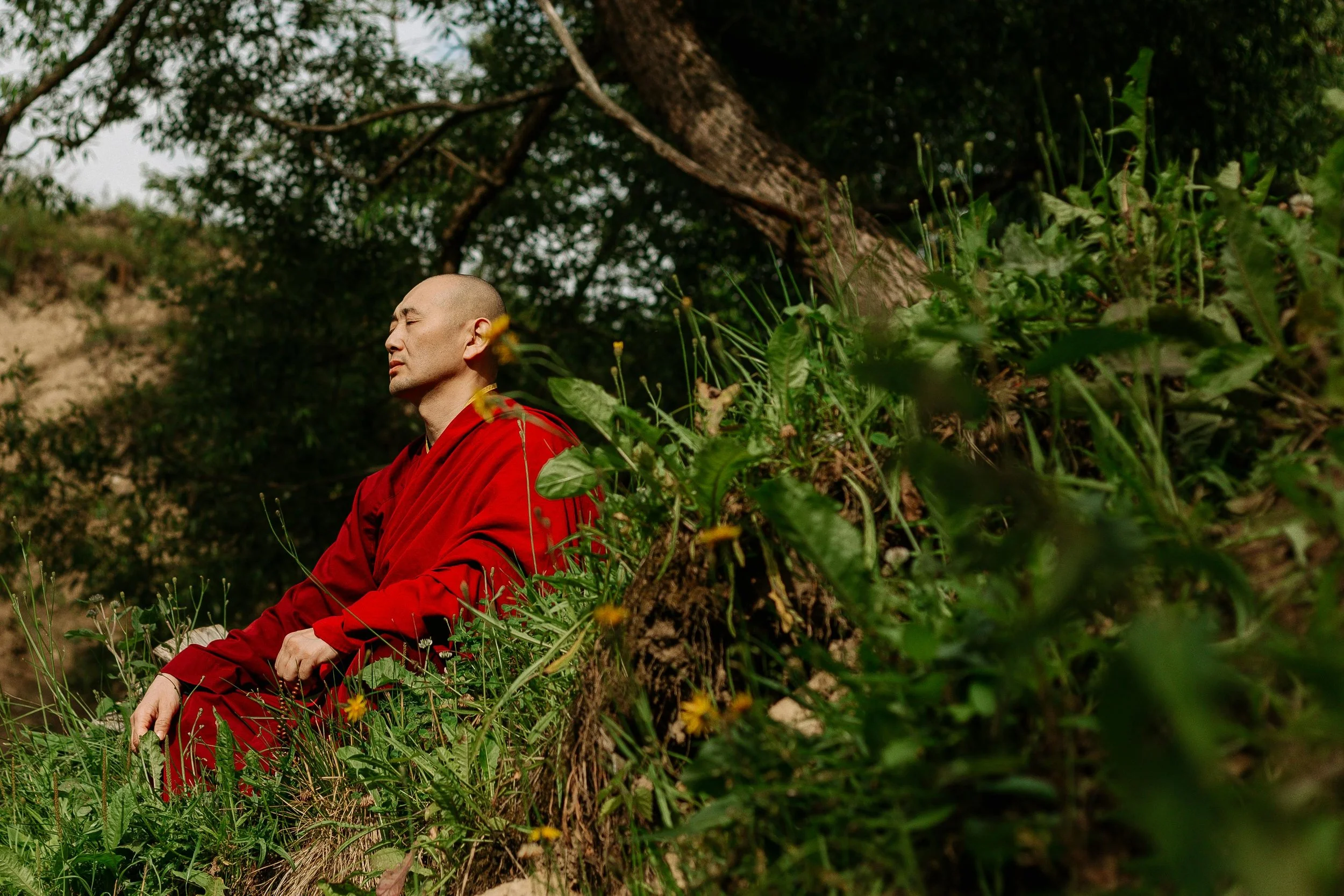
We all know what it means to concentrate. Concentration is the ability to focus on something without getting distracted. We probably do it in our lives without even realizing. You get sucked into a good book, get in the zone while working, or find your flow while running.
In the context of meditation, concentration is the ability to focus on the object of our awareness. It may the breath, something in the body, a phrase or mantra, or anything else in our awareness. We can cultivate this quality in sitting meditation or in walking meditation.
The way we cultivate concentration is by actually not being concentrated in a sense. When the mind does wander off or get distracted, we bring it back to the object of awareness. Every time we recognize the mind has drifted and bring it back, we strengthen our concentration. Think of it as doing a rep at the gym.
I think this is useful to remember, as it can help us be gentler with ourselves. We don’t have to clear our minds to meditate at all. In fact, the arising thoughts and distractions during a concentration practice are actually the vehicle that takes us to a more concentrated mind.
Concentration in Buddhism
Concentration is a crucial part of the Buddhist path. Wise Concentration is one of the factors of the Noble Eightfold Path, and integral to insight practices. The word in the Buddhist teachings in the Pali language is samadhi. Samadhi actually means something like unity or collectedness.
I think this is an important point to understand. In the Buddhist context, concentration doesn’t carry with it the connotation of too much effort or straining. Rather, it is the quality of collecting our attention and awareness, unifying the mind onto an object. In fact, there’s a stress in the traditional teachings on joy and happiness as factors of concentration.
In Buddhist teachings, the instructions on concentration aren’t just to build focus. The purpose of meditation in this case is to cultivate the states of absorption, or jhanas. These are various states of deep concentration that can lead to deep insights and clarity. Along the way, there are many signs of deepening concentration. We are instructed to cultivate these states along with practicing mindfulness and the heart practices.
I covered the Noble Eightfold Path on my podcast, with a specific episode on the factors in concentration. You can find that episode here. It covers concentration, as well as Wise Effort and Wise Mindfulness.
Benefits of Concentration
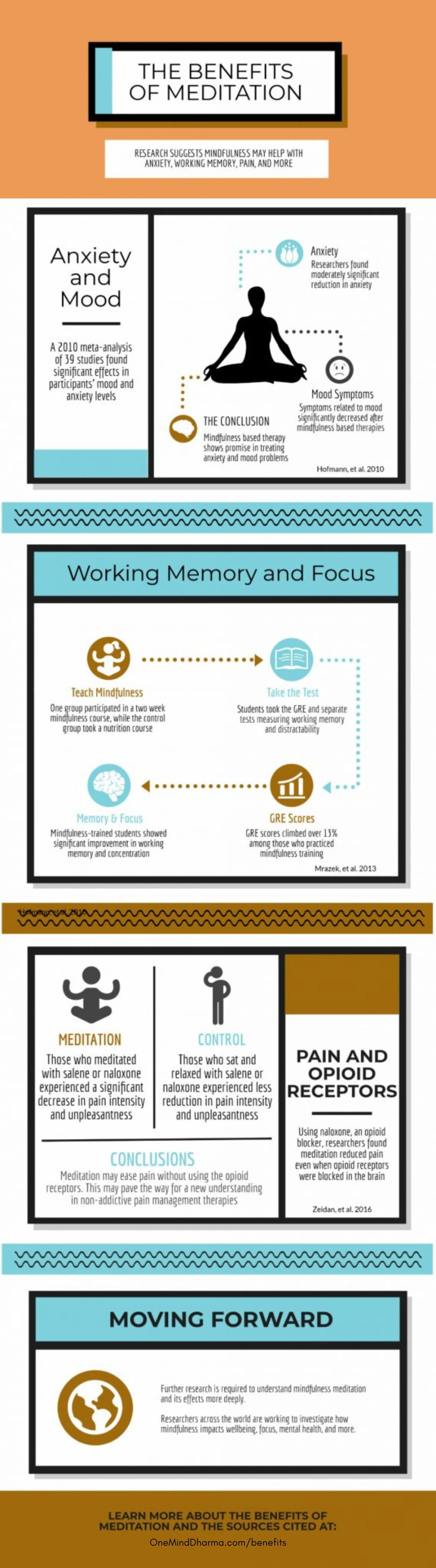
Cultivating concentration has many benefits, both in and out of meditation. It definitely seems to take the backseat to practices like mindfulness, but it is not a factor that we should ignore on our meditation paths.
Cognitive Benefits
A 2020 study looked not just at the way the brain networks, but the actual architecture of the networks. A 2022 meta-analysis found that networks such as the default mode network, salience netowrk, and executive control network were changed in those who practiced what researchers called “focused attention meditation.”
Rsearchers found that individuals had better performance in attention-based tasks with as little as just ten minutes of concentration meditation a day. In longer-term practicioners, focus was certainly increased. Participants had longer attention spans, reduced distractibility, and stronger cognitive control (the choice of where one puts their attention).
Emotional/Psychological Benefits
The same research and this study from 2026 found that concentration meditation can reliably lower state anxiety. With only ten minutes of practice, the athletes in the study who practiced concentration meditation reduced anxiety more than the group doing controlled breathing or allowing random thoughts. This points toward the potential for concentration, even in short bursts, to relieve symptoms of anxiety.
A 2025 study looked at concentration meditation for those struggling with comorbid chronic pain and depression. In this research, researchers discovered the concentrative practices to both reduce perception of chronic pain and the associated symptoms of depression.
In one of my favorites studies on the topic of concentration, researchers looked at concentration and open awareness meditation together. Over the course of the eight weeks, researchers found that those who practiced four weeks of concentration before four weeks of mindfulness had several notable benefits over the group that practiced mindfulness first and concentration second. These benefits included higher scores in mindfulness skills, greater awareness, and more acceptance.
Benefits in Meditation
When it comes to meditation, concentration serves us greatly. The most notable benefit is that deep concentration creates an immense sense of relief. When we cultivate the ability to concentrate, we find ourselves in a state of ease. We aren’t distracted by thoughts or other experiences, and it actually can be quite calm and rejuvinating.
Concentration also supports every type of meditation we do. Whether we are practicing mindfulness of the breath or cultivating compassion, concentration allows us to be fully present with the task at hand. It supports all of our other meditation practices. As concentration grows, so does our ability to practice mindfulness or compassion fully.
How Concentration Supports Mindfulness
I talk about this topic specifically in my post Mindfulness and Concentration: Complementary Qualities. Let’s take the body scan meditation as an example. As you move through the body focusing on each spot, the mind may begin to drift. In those moments, it is mindfulness that helps us recognize the mind has wandered. But it is concentration that helps us bring the mind back to the body.
With more developed concentration, the mind wanders less frequently. And with more developed concentration, we can bring the mind back more easily. Whatever the practice may be, concentration helps us tune in more fully and deeply. When we aren’t distracted, we have continuity in our observance of whatever object. This leads to deeper insight and understanding into the nature of experience.

Techniques for Building Concentration
So, we understand what concentration is and why it is important. It’s time to talk about actually working to improve our concentration in meditation. Working with the breath is by far the most common in our meditation tradition, but I want to offer a look at some of the other ways we might cultivate concentration.
Breath Focus
Focusing on the breath is the traditional way we cultivate concentration in meditation. A common technique for beginners is breath counting. With this method, you count the breaths to help keep the mind focused. The counting serves as a way to help keep the mind on track. Some people count every inhale and exhale, only the inhales, or only the exhales. I don’t think it matters much, other than counting every inhale and every exhale gives the mind more to do and can be useful for beginners.
As we progress in cultivating concentration, we can eventually drop the counting. Where the counting serves a purpose at the beginning (of a single sitting period or our practice in general), it becomes a distraction as we deepen our concentration. When you feel that the mind is settled and concentrated, you might consider dropping the counting to just be with the breath.
Another common practice that helps build concentration is actually a mindfulness practice, mindfulness of the breath. Mindfulness of the breath, known in Buddhism as anapanasati, can help us build both mindfulness and concentration. The practice is a progressive 16-step practice for cultivating mindfulness, but the focus on the breathing can help build a substantial amount of concentration.
Visual Meditation
Another traditional Buddhist form of building concentration is known as kasina. In this practice, you use the visual field to collect your attention. This can be done with the flame of a candle, colored disks, or water. The most common way I’ve seen this practiced is certainly with the flame of a small candle.
The idea here is to softly gaze at the object, using it as the focus of your awareness. You might stare at the flame or whatever object you use for a few minutes, then close your eyes. You can see if you can hold the afterimage in your mind’s eye, then reopen the eyes to stare at the object once again.
Mantras and Repetition
Many traditions use mantra recitation as a form of concentration practice. Well, it is partially intended as a form of concentration. It also may serve as a practice in connecting with one’s Buddha-nature, cultivating loving-kindness, etc. Mantras are common in Tibetan Buddhism, Nichiren, Pure Land, and Chan/Zen.
It’s really the same as working with the breath or a visual object. You collect your attention onto the phrase or mantra, and bring your attention back when the mind wanders. For some people with strong auditory processing, this is a great way to build concentration that keeps interest.
Body-Based Concentration
Outside of the breath, there are other ways to practice with the body. We truly can tune into any one experience in the body to build concentration. This is commonly done with the sensations in the hands or feet. There’s nothing special to do. Just bring your awareness to the sensations at one point in the body, and bring the mind back whenever it wanders. Using the feet with walking meditation is a great example of this.
Listening Meditation
You can also use any sound as your object of concentration. It may be some humming, a bird singing, or the buzz of a nearby freeway. Ajahn Sumedho, a senior monk in the Thai Forest tradition, recommends using what he calls the sound of silence. If you sit in silence and tune into the realm of hearing, you’re likely to notice a high pitched humming. He uses this to build concentration, and many of his students find it to be a helpful practice.
Loving-Kindness
This is related to the mantras and repetition, but I wanted to specifically single it out. I’ve talked about this before in a podcast episode here, but loving-kindness can absolutely be a practice in cultivating concentration. We use the phrases, and perhaps the pleasant feeling tone of loving-kindness. These serve as the object, and I personally have found great success in cultivating concentration with this method.
Common Challenges
There are many common challenges people face when it comes to concentration meditation specifically. This is by no means an exhaustive list of every difficulty you will face, but these are a few of the most common ones I see in my students.
Over-Efforting
Over-efforting can arise in many ways. You might be tight or rigid mentally during your practice, or you might find yourself with a lot of physical tension. If you find yourself trying to crush thoughts or force concentration, you might be over-efforting. This experience is common, and often leads to a sense of anxiety or restlessness.
We do need to exert some effort in meditation, but too much effort is not useful. You can try to make your practice lighter, or even playful. Let go of the outcome, and just focus on the breath or object in front of you. You might pause in these moments, take an extra deep brath, and try to let go of the striving. For cultivation of concentration, gentleness and ease are your friends.
Expectations
Attachment to expectations is another experience that can make concentration meditation difficult. We think we know what meditation should feel like, and we are not having the experience we believe we should be having. Or, we expect some calmness or concentration and it just isn’t happening in this moment for us.
Expectations can lead to a tightening and striving. It’s great to have goals or intentions, but when they become expectations we are setting ourselves up for craving and clinging. In Buddhist traditions, craving and clinging must be abandoned to reach deeper states of concentration. One way we can work toward this is by watching for expectations, and just returning to the object of our awareness without stories to hold on to.
Mind Wandering
Obviously mind wandering happens to us all, but it can be difficult for beginners. We might fall into overthinking, have trouble bringing the mind back, or find that the mind wanders off between every inhale and exhale. To be frank, thoughts arising are not actually a difficulty. How we relate to the experience is where the difficulty arises.
We can learn to observe thoughts without judgement, strengthen concentration by continually bringing our awareness back, or just note that the mind is thinking. In reality, the mind being active need not be a problem. Every time the mind wanders off, you’re offered a new opportunity to strengthen your concentration. Treat the wandering mind as an opportunity rather than an obstacle.
Boredom
Boredom in meditation is a common difficulty in general, but especially with concentration practices. It can be difficult to stick with one object. The boredom can lead to restlessness, anxiety, or mind-wandering. We can do two things here, either make an adjustment or learn to push through the boredom.
To make an adjustment, you might try to work with a different object of awareness. You can scroll down to the tip on finding something interesting for more thoughts on this and why it’s benefecial. You can also try to work through the boredom, building resiliency and decreasing reactivity. I talk about how to do this more in the tip on sticking with one object.
Restlessness or Anxiety
Restlessness and anxiety are common experiences during meditation, and one of the main reasons meditation feels hard at first. It’s a natural response. We are so accustomed to going, having stimulation, and being productive. Sitting in silence in meditation can quite legitimately feel confusing to the nervous system. The brain and body just aren’t entirely sure how to handle the experience of meditation!
As long as it is not too activating, I do generally recommend sitting through any restlessness. Every time we work through it, we build resilience. If the experience feels too much for you, consider changing to a different practice that works better for you. Finally, remember that it takes time to build concentration, and it takes time to experience a decrease in restlessness and anxiety. I write about this topic more in my post How Long Does Mindfulness Take to Help Anxiety?
Sleepiness
Sleepiness can be seen perhaps as the other side of the coin of restlessness. It can arise out of boredom, overwhelm, or simply being tired! It can feel like a dullness in the mind, falling asleep or nodding off, or even restlessness. Before making any adjustments to your practice, you might consider if you actually are just tired! Sometimes we are indeed exhausted, and when we close our eyes to meditate the brain says, “Time to go to sleep.”
I think one of the simplest adjustments we can make is investigating if we should meditate in the morning or at night. For some people, one seems to work much better than the other. Try changing the time of day you’re meditating. You also might get up and do some walking meditation. It’s significantly harder to fall asleep while walking than sitting.

Practical Tips for Building Concentration
Again, this isn’t a list of everything you need to do to practice concentration. They are just some general tips I’ve found useful in my own practice and in working with students and groups. You can check out more tips in general here.
Start Small
You really don’t need long meditation periods to start out with concentration. Yes, for deeper levels of concentration we do need to sit for longer periods generally. But to start, five to ten minutes can often be enough. In fact, research has found benefits of meditation in as little as five minutes of practice.
Part of the reason for this is that it keeps meditation from being too unpleasant, and makes it manageable. This in turn leads to less aversion to meditation, an increased likelihood of regular practice (more on this in a moment), and some continuity with your practice. I strongly recommend not overdoing it and starting small. I cover this topic more in my post For How Long Should Beginners Meditate?
Stick with One Object
I do think it can be useful to investigate different objects of awareness when it comes to concentration. Find what works for you. Once you do, stick with that practice for a solid amount of time. I often suggest my students stay with one practice for at least a month. This gives ample time to really dive into it and develop the concentration.
As I mentioned in the section on boredom, this can also be useful in working through those barriers we face. If the boredom or restlessness is present, we know we are sticking with this practice. My experience is that those times of consistent boredom or restlessness are often where we take a little leap in our practice.
Consistency Beats Duration
This relates back to the topic of starting small. As I cover in my post How Often Should You Meditate as a Beginner?, research pretty clearly finds that consistency in meditation practice is more important than the duration of sitting. Focus on building a daily habit. This gives the best outcomes when it comes to the benefits of meditation, and makes the habit more likely to stick.
I know it can be hard to find the time to meditate. My recommendation is to find a consistent time to practice. If you can meditate at the same time and in the same place every day, it makes it much easier to build a consistent habit. It also can have the effect of helping you settle in meditation, as the mind recognizes that this time/space is for meditation every day.
Let Go of Perfection
When it comes to working with concentration, striving for perfection is one of the biggest hurdles many beginners face. This leads to the straining and stressing that actually inhibits the quality we’re trying to cultivate. Instead, we should seek to bring the mind back when it wanders. That’s all.
Remember that the moments of mind drifting are actually opportunities. And to find the ease of concentration, you’ll need to practice and train. Would you be frustrated if you went to the gym and couldn’t pick up the heaviest weight and train with it the first time? No, you’d train with consistency to be able to lift it up. It’s the same here; give yourself time to train rather than expecting so much.
Find Something Interesting
In my personal experience, one of the best things we can do for concentration practice is to find something that sparks some interest. If the breath just isn’t doing it for you, try some listening meditation. You also might try to find a specific aspect of the breath that is actually interesting to you. It may be the pauses between inhale and exhale, the length of the breath, or a specific sensation of breathing somewhere in the body.
When we follow our curiosity, we are able to engage with more interest. Meditation becomes less of a chore, and more of an active investigation. I think curiosity is one of the most important factors when it comes to concentration meditation. It also has the added benefit of generally keeping meditation more light-hearted and less stressful.
Try Sitting in Silence
Many newcomers to meditation start with guided meditations, which I myself recommend. If you’re struggling with your concentration practice, you might consider sittign in silence. Although guidance can help us know how to practice and keep us on track, it can sometimes actually get in the way of concentration.
I write about the pros and cons of silence and guided meditations in my post Guided Meditation vs. Silent Meditation: Which is Right for You? I recommend reading the post and considering if silence may be beneficial for your concentration practice.
Single-Tasking
Finally, I want to offer one way to practice in daily life. Single-tasking is a bit like the opposite of multi-tasking. We so often are multi-tasking throughout the day. Even when we’re not directly multi-tasking, we have so much stimulus and information being thrown our way. We may not be conscious of it, but it impacts us.
Make some effort during your daily life to single-task. Do one thing at a time. Take a walk without your headphones. Drive to work without the radio or a phone call. Focus on one thing throughout your day. This is a great way to train the mind in concentration outside of meditation and fully be present.

Finding Your Path
Finding your path with meditation can be difficult. Reflecting on my own journey, I see that it wasn’t necessarily that I struggled to find my path. It was more of a gradual discovery of what worked for me and where I could work. We certainly can benefit from investigating different practices, teachers, traditions, and teachings.
I have a guide here that covers mindfulness for beginners, including some more tips, ways to practice, tips, etc. It offers a solid jumping off point I hope. I also have my page How to Start a Daily Meditation Practice: Tips and Guidance for Beginners. I truly believe that consistency is the best thing we can do for our practice, so I strongly recommend starting there.
If you want to dive more into these practices, I am also here to support you. I work one-on-one with students around the world interested in building a regular meditation practice. You can reach out for a free consultation to see if we’re a good fit. Or I can point you in the right direction if you are looking for some specific teachings or meditations!
More Posts

Matthew Sockolov is a Buddhist meditation teacher who trained at Spirit Rock Meditation Center in Woodacre, California. Completing the Dharma Leader training program in 2017, Matthew was given power to teach in the Insight Meditation tradition by Jack Kornfield, Kittisaro, Thanissara, and others. You can learn more about Matthew here.