The Noble Eightfold Path is one of the most important teachings in Buddhism. As the fourth of the Four Noble Truths, this teaching gives us the instructions on how to end dukkha, or suffering. When cultivated together, these eight factors lead to freedom from suffering.
I have a four-part series in my podcast covering the Noble Eightfold Path as well that I recommend listening to. It starts with this episode covering the Four Noble Truths before going into the factors of the path. For more on getting started with Buddhism, read my post How to Practice Buddhism - A Guide for Beginners.

The Four Noble Truths
Before jumping into the Noble Eightfold Path, it’s crucial to understand the context of the teaching. The Eightfold Path is taught as the final of the Noble Truths. The Four Noble Truths are:
The truth of dukkha.
The truth of the cause of dukkha.
The truth of cessation of dukkha.
The path to cessation.
The most basic explanation of the Four Noble Truths is that they are an observation about the nature of suffering and how to relieve ourselves from it. The first truth tells us to know the suffering and it’s nature, the second its causes, the third its cessation, and the fourth how to do so.
The Noble Eightfold Path
As the “prescription” part of the Four Noble Truths, the Noble Eightfold Path offers direct instruction on how to relieve suffering. These eight qualities are to be cultivated in order to lessen our suffering and the suffering of others. They can be broken up into three groupings, as I’ve done in the below sections.
Moving through this list of the eight factors, I will do my best to offer a bit of a traditional Buddhist understanding as well as a modern or pragmatic take on how we can practice this as laypeople in everyday life.
The eight factors are:
Wise View
Wise Intention
Wise Speech
Wise Action
Wise Livelihood
Wise Effort
Wise Mindfulness
Wise Concentration

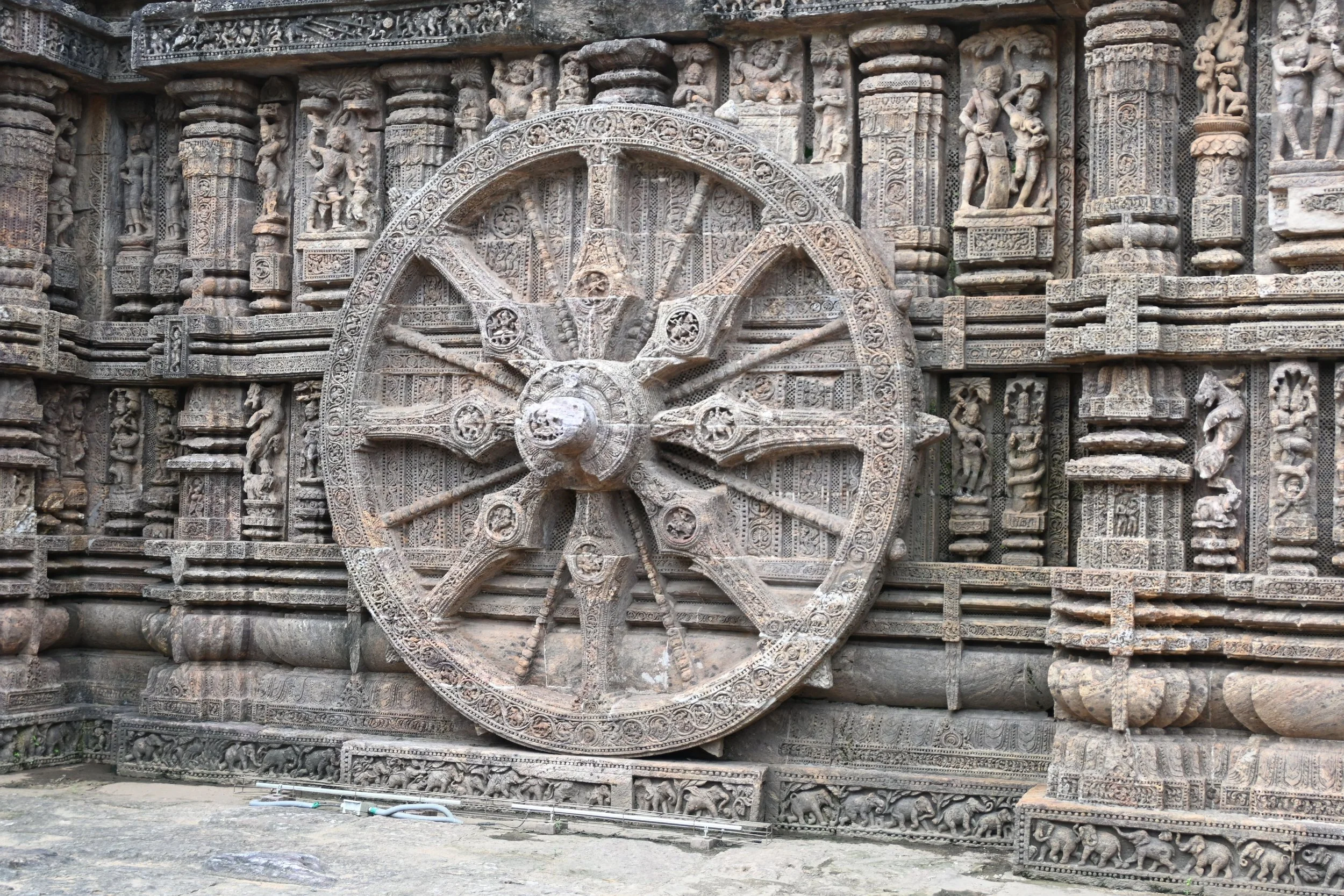
The eight spokes of the dharma wheel represent the eight factors of the Noble Eightfold Path.
Pañña (Wisdom)
First up is the section of paññā, or wisdom. These two factors are qualities we develop to help us see clearly and understand experience. It’s important to note that just because this is the first section, we don’t have to cultivate these qualities before working on other ones (more on this at the end of this post).
Wise View
Wise View is the first factor of the path, sometimes translated as Wise Understanding. The term used in Pali, diṭṭhi, is often translated as either view or belief. This can be applied in a number of ways, but the Buddha taught this factor in relation to several specific teachings.
Buddhist Teachings
First, we should cultivate an understanding of the law of kamma, or karma. That is we should know for ourselves that wholesome actions lead toward well-being and less suffering, while unwholesome actions lead to more suffering for ourselves and others. Karma can most simply be understood as the law of cause-and-effect, and Wise View means seeing this clearly and deeply.
Next, the Buddha instructed his students to have Wise View surrounding the Four Noble Truths. He called us to directly know the Four Noble Truths, not just understand conceptually. This means actually seeing, or touching the truths in our lives. We can see when dukkha is present, how it arises, how it passes, and what qualities support us in this journey.
Finally, we are to have a knowing of the Three Marks of Existence. These are three qualities that everything we experience share. The three characteristics are impermanence, suffering, and not-self. To learn more about the Three Marks, you can check out this article here.
Practicing Wise View
Personally, I find the core of Wise View to reside in asking myself about an experience. You might use a question like, “Is this true?” or “What is happening here?” Understanding the teaching conceptually, we can actually apply our understanding to our direct experience.
Pay attention in your life to see where karma plays a role. Do certain activities, interactions, or experiences seem to lead to more suffering or more freedom? Can you identify the unwholesome mental states or causes of the suffering? This ties in as well with the Four Noble Truths.
Wise View comes from repeatedly investigating the nature of experience. Look for the impermanence, the cause and effect, and the causes of suffering. I find that moments of clarity surrounding Wise View often feel like a bit of an “aha!” moment, but not always.

Wise Intention
There are a ton of different words you’ll find here with the second factor. I often use the term intention, but you may see thought, resolve, or purpose being used. Whichever word you use, the teaching remains. We cultivate a resolve or intentions that lead to liberation and lessen suffering.
Buddhist Teachings
The traditional Buddhist teachings on Wise Intention include three intentions: renunciation, good-will, and harmlessness. These are relatively simple and clear, so I like to really focus on these aspects when talking about Wise Intention.
The intention of renunciation is taught as an antidote to craving and clinging. We are not actually being called specifically to renounce anything physically, but to let go of the grasping and clinging. We can notice where clinging and craving are present, and cultivate a resolve to let go of said clinging.
The intention of good will is the antidote to hatred or ill-will. With good will, we are guided by friendliness, kindness, and a wish for others to be well. This is deeply related to the practice of metta, or loving-kindness.
Finally, the intention of harmlessness is simply to not cause harm to others. We cultivate a heart and mind of compassion, connecting with an intention to not kill, hurt, or harm others. This is often traditionally taught as including not causing pain, suffering, oppression, or fear in others.
Practicing Wise Intention
To cultivate Wise Intention, we can periodically check in with our intentions. When you’re making a decision or taking an action, you might pause and ask yourself about your deeper intentions. Are you just hoping to avert from some suffering in this moment, or are you actually intending to lessen your suffering in the big picture?
We can also reflect retroactively. When we look at decisions we made, actions we took, or things we said, we might be able to see in hindsight what our intentions were. Often, our intentions are more immediate and driven by craving and clinging. When we begin to tune into our intentions like this, we can reconnect with these deeper ones as taught in Wise Intention.
Sīla (Ethics)
The second grouping of factors on the Noble Eightfold Path is called sīla, which is most often translated as values or ethics. I find it interesting that in many traditionally Theravada countries such as Thailand, Sri Lanka, Myanmar, and Laos, novice practitioners focus on these factors of ethics before ever taking up the meditation practices.
This is partially because a strong ethical practice sets up a solid foundation for our meditation practice. I can never find the quote exactly, but I remember Jack Kornfield saying once that it is hard to meditate after a day of murdering and stealing.
Wise Speech
The first factor of ethics is Wise Speech. Much can be said about Wise Speech, and I’ve actually written a post on it over at Wise Speech: Practicing Mindful Communication if you want to learn more.
Buddhist Teachings
As I cover in the above linked post, the Buddha spoke many different times about our speech. He mentioned to “abstain from lying, from divisive speech, from abusive speech, and from idle chatter” (SN 45.8), to speak “at the right time, in truth, affectionately, beneficially, and with good-will” (AN 5.198), and to speak with words that “would not torment oneself nor harm others.” (Thag 21)
If we extract these from the suttas, we can see a few guidelines for Wise Speech:
Abstain from lying
Abstain from divisive speech
Abstain from abusive speech
Abstain from idle chatter
Speak in a timely manner
Speak the truth
Speak affectionately
Speak for the benefit of others
Speak with good-will
Speak in a way that does not cause harm to ourselves or others
The essence of Wise Speech, as such, can be understood as speaking in a way that both supports the wellbeing of ourselves and others, and does not cause harm to ourselves nor others.
Practicing Wise Speech
I think we all can see fairly easily where we can practice Wise Speech in our lives. Even the most mindful and kind of us have our moments. I have a few specific practices that I really enjoy personally and with my students when it comes to Wise Speech in everyday life.
First, avoid idle chatter. This seems like a less-important one, but is a great way to deeply tune in to our patterns of speech. When I spent time at Wat Metta Monastery, I remember a monk there recommending that I not speak unless I needed to. It was very difficult to avoid chatting at meals, but it allowed me the opportunity to see that my speaking was often just aversion from boredom.
Next, investigate timeliness. Sometimes you have something true and useful to say, but the timing isn’t quite right. Maybe the most honest and skillful thing you can say in a moment is that you don’t think now is the right time for this conversation, or that you need some time to think about your response.
Finally, allow space for others. Part of Wise Speech is also wise listening. Make space for others to talk and communicate. Converse in a way that helps the other person feel safe, at ease, and comfortable.

Wise Action
Wise Action may seem vague at first, but the basics are clear. We are called to be mindful of our behavior in order to not cause suffering to ourselves and others. In fact, we should act in a way that supports the awakening and wellbeing of others.
Buddhist Teachings
The foundational teaching on Wise Action in Buddhism is to follow the teachings of the Five Precepts. These five teachings for laypeople are the basis of ethical action, and include abstaining from harming others, stealing, sexual misconduct, lying, and ingesting intoxicating substances.
Monks and nuns have more precepts they follow, known as the vinaya. But for laypeople, Wise Action traditionally means following these five precepts, or training rules. When followed, they help us not cause harm to ourselves or our communities. We create a safe environment for ourselves and others, and one that is conducive to practice and liberation.
Practicing Wise Action
To practice Wise Action in daily life, we can of course follow the five precepts. In fact, this should be our first step toward Wise Action as it is clearly what the Buddha taught and recommended. In our cultivation of the path it’s important to remember the precepts are trainings we undertake, not rules we need to be perfect with from the start.
Much as with the other ethical practices of the Noble Eightfold Path, we can also reflect on whether the actions we take are supporting wellbeing both in ourselves and others. Some actions will be clearly harmful, but many are more subtle. You might ask if the actions are cultivating seeds of understanding, equanimity, compassion, etc. or if they are feeding more craving, aversion, and delusion.
Wise Livelihood
The last factor of the path that falls into the ethics category is Wise Livelihood. This teaching is essentially an encouragement to earn a living in a way that is wholesome and supports the liberation of both ourselves and others.
Buddhist Teachings
According to Buddhist teachings, Wise Livelihood is simply not working or earning a living in unwholesome businesses. The suttas name specific businesses or industries such as selling or trading weapons, humans, meat/animals, intoxicants, and poison. The Buddha’s instructions are relatively straightforward with this one.
Practicing Wise Livelihood
As mentioned, the way to practice Wise Livelihood is to check in on how we earn our livings. It almost can be seen as a form of Wise Action in my opinion. Is the way we are earning money causing harm to others or the world? If the answer is yes or maybe, you might consider finding a way to use your skills in a different job.
I also believe we can look at our work and livelihood through the lens of caring for ourselves. Maybe you’re being treated poorly at work, experiencing burnout, or just unhappy. You may not directly be causing harm in the ways the suttas illustrate, but it may be a livelihood that is not supporting your wellbeing.

Samadhi (Concentration)
The final section of factors on the Noble Eightfold Path is samādhi, or concentration or collectedness. The etymology of the word actually points to a “bringing together” of the mind. Although we most often use the word concentration in English, I really prefer the translation of collectedness. These are primarily qualities we cultivate in meditation practice.
Wise Effort
The first of the collectedness factors is Wise Effort. As of writing this, I’m actually in the middle of teaching an online six week class series looking at Wise Effort as I believe it to be an incredibly important and often overlooked factor of the path.
Buddhist Teachings
The teachings on Wise Effort are rather straightforward. We are directed to put effort forth in four specific ways:
To prevent unwholesome seeds from arising
To let go of unwholesome seeds that have already arisen
To cultivate wholesome seeds that have not yet arisen
To maintain wholesome seeds which have already arisen
When discussing wholesome and unwholesome seeds we’re talking about qualities such as kindness, goodwill, mindfulness, ill-will, anger, greed, etc. We are called to put effort forth to water the seeds that are wholesome and support wellbeing, and to let go of the ones that cause suffering.
Practicing Wise Effort
I think the traditional teachings of Wise Effort really offer all we need to practice both in meditation and in daily life. Of course, during periods of meditation we are to know deeply these four efforts. We can work to understand the how, when, why, and what of both wholesome and unwholesome states, specifically through practice of the Four Foundations of Mindfulness.
When we are meditating and see an unwholesome state already arisen (such as aversion), we can meet the experience with compassionate awareness to let go of the state. To cultivate wholesome seeds we might sit in concentration practice or metta practice.
Off the cushion and in daily life, we can do the same. Where can you put effort forth to water more wholesome seeds in your life? It might be setting aside more time to meditate, going for a walk, or connecting with a friend. And as far as the unwholesome seeds go, perhaps you can put effort forth to avoid situations that cause you stress, encourage unwise action, or water seeds that are unwholesome.

Wise Mindfulness
Wise Mindfulness is perhaps the most well-known part of the Buddhist path. I personally find it a bit concerning how popular mindfulness has become with neglect for the other factors of the path. But, it is a factor of the path and one we must cultivate both in and out of meditation.
Buddhist Teachings
The Buddha’s teachings on Wise Mindfulness really center around the Four Establishments of Mindfulness, or Four Foundations of Mindfulness. This teaching is often translated as the “direct path to realization.” It’s the way many scholars and teachers believe the Buddha himself practiced and instructed his monks to cultivate mindfulness.
You can read more about them here, but here’s the basics. The purpose of the Four Foundations is to intimately know the three marks of existence (impermanence, suffering, and non-self). We do this through observing with presence and awareness four separate categories of experience.
The first foundation is mindfulness of the body. We work on establishing mindfulness of the breath, body, and its impermanent nature. This is done through practices like body scans, cemetery contemplations, and observing the breath. We are also specifically called to practice moving meditation such as walking meditation in this teaching.
The second is mindfulness of vedana, or feeling tone. These are not feelings as in emotions. Rather, they are the nature of an experience to be either pleasant, unpleasant, or neutral. We bring mindfulness to our experiences of sight, taste, smell, hearing, feeling, and thinking to observe the feeling tone of each experience as it arises and passes.
The third foundation is mindfulness of mental states. The sutta lists states such as with lust, with hatred, with delusion, shrunken, and distracted as examples. We are also to know when the mind is without these qualities. It is crucial to note this is not mindfulness of our thoughts, but the overarching mental state.
The final foundation is mindfulness of the dhammas. This one causes confusion in many people, but I think the simplest explanation is recognizing whether or not the experiences and responses of the mind are leading toward suffering or liberation. Traditionally, this foundation includes knowing the five hindrances, the five aggregates, the factors of enlightenment, and the Four Noble Truths.
Practicing Wise Mindfulness
Well, pretty much anyone who meditates is working to cultivate Wise Mindfulness! As far as pragmatic Buddhist-based cultivation goes, we can specifically work with the Four Foundations of Mindfulness in our practice. I highly recommend the book Satipatthana: The Direct Path to Realization by Bhikkhu Analayo. He is a monk and scholar who wrote this book as his doctoral thesis and offers a deep understanding of the text and how to practice it.
Out of meditation, we can work to practice mindfulness in everyday life. My simplest suggestions for this are to slow down, allow space in your life for quiet moments, and use some mindfulness reminders to support you. I am passionate about bringing the quality of mindfulness off the cushion and into everyday life, so look around my blog or listen to my podcast for more ideas.
Wise Concentration
Last but not least, we have Wise Concentration. Concentration is not mindfulness. It is a collecting of our awareness and placing it on an object in front of us. It may be the breath, a noise, someone speaking, or whatever task is at hand.
Buddhist Teachings
The Buddha taught Wise Concentration as the cultivation of the four meditative absorptions, or jhanas. These are qualities of deep concentration that free us from both mental hindrances and distractions from our other senses. This can be done a number of ways, but is most notably taught in the Anapanasati Sutta, or the discourse on establishing mindfulness of the breath.
Practicing Wise Concentration
In practice, we can cultivate a collected awareness through practices such as mindfulness of the breath. This is most commonly done via breath counting meditation. It’s important to note that we are cultivating a quality… The mind is of the nature to wander and become distracted. Concentration practice helps us to cultivate the ability to collect the mind.
I also strongly believe that metta can be a concentration practice. Just as we use the breath as the object of awareness in breath meditations, we can use the phrases of metta as the object of concentration. For some, I’ve found that this may work more efficiently to cultivate a collected mind.
Finally, we can cultivate concentration in our daily lives by collecting our attention onto whatever we are doing. Avoid distraction where possible. Shut off the music or podcast, do one thing at a time, and put forth effort to cultivate a mind that is collected onto one experience.
Additional Thoughts on the Path
The Noble Eightfold Path is the encapsulation of the entire path to liberation from suffering. We simply cannot read one page like this with explanations and fully understand it. Furthermore, the Buddha’s instructions are not to just intellectually understand these factors, but to actually cultivate them and know them in our own experience.
Here are a few additional thoughts that I have that may help you on your journey. As always, if you have any questions, please don’t hesitate to reach out.
The Order of Factors
Some Buddhist lists are in a specific order and meant to be cultivated as such. The Eightfold Path is not one of them. We are called to cultivate all eight factors, and work with whichever one we have an opportunity to in this moment. You might spend some time investigating a specific factor, or seeing which factor can be cultivated in any given moment.
Interdependence
You also will notice that these factors are interconnected very deeply. In order to cultivate Wise Mindfulness, you will need to develop some level of concentration. In order to investigate your livelihood, some quality of mindfulness is required.
I won’t continue to list examples, but the point is clear. These are not standalone factors. Our cultivation of each factor influences and supports other factors on the path. Or, to understand it in a different way, they all come together to make a whole practice/cultivation.
Cultivation
As mentioned, people focus heavily in the west on cultivating mindfulness or perhaps concentration. While these are indeed essential parts of the path, they are not the complete path the Buddha laid out.
In our aspirations to become more mindful, cultivation of all of the factors will support us. When we investigate and cultivate the factors individually and together, we have a much more potent ability to lessen our suffering and move toward liberation. If you find yourself neglecting one or some of these factors, make some effort to lend some attention there.
Translations
There are many different translations of this teaching. When we take a teaching from an ancient language and translate it into English, we lose something. I personally find it useful to research and understand the original Pali words.
A good example is the word dukkha. We often translate it as suffering. The actual word comes from something like “bad axle space” or “bad hole.” It comes from the ancient carts, where a poorly shapen axle hole caused a bumpy ride. Dukkha is not necessarily an intense suffering, but a subtle discontentment.
Realistically, when I say the word dukkha in my teachings or writings it is because I find it to be the best word. We don’t really have a word that fits perfectly in English. This is just one example, but there are many words in Pali that don’t quite have an English equivalent.
To stay connected, join the free WhatsApp group. The group is a place to ask questions, discuss mindfulness, find meditations, and get links and topics to the weekly sitting group. You can join the group for free at OneMindDharma.com/chat.
More Posts