Anapanasati: Mindfulness of Breathing
You are no doubt familiar in general with the concept of mindfulness of breathing. The Anapanasati Sutta is a discourse the Buddha gave on mindfulness of the breath. It is a popular text in many Buddhist traditions, offering direct practice instructions.
It is closely related to the Satipatthana Sutta (Discourse on Establishing Mindfulness), where the Buddha offered instructions on the cultivation of mindfulness. Many authors see the Anapanasati Sutta as direct practice instructions for these four establishments of mindfulness.
Note that this is a complex text with many different interpretations. This post reflects my understanding based on reading and practicing. For an in-depth analysis, I highly recommend Bhikkhu Analayo’s book Mindfulness of Breathing: A Practice Guide and Translations.
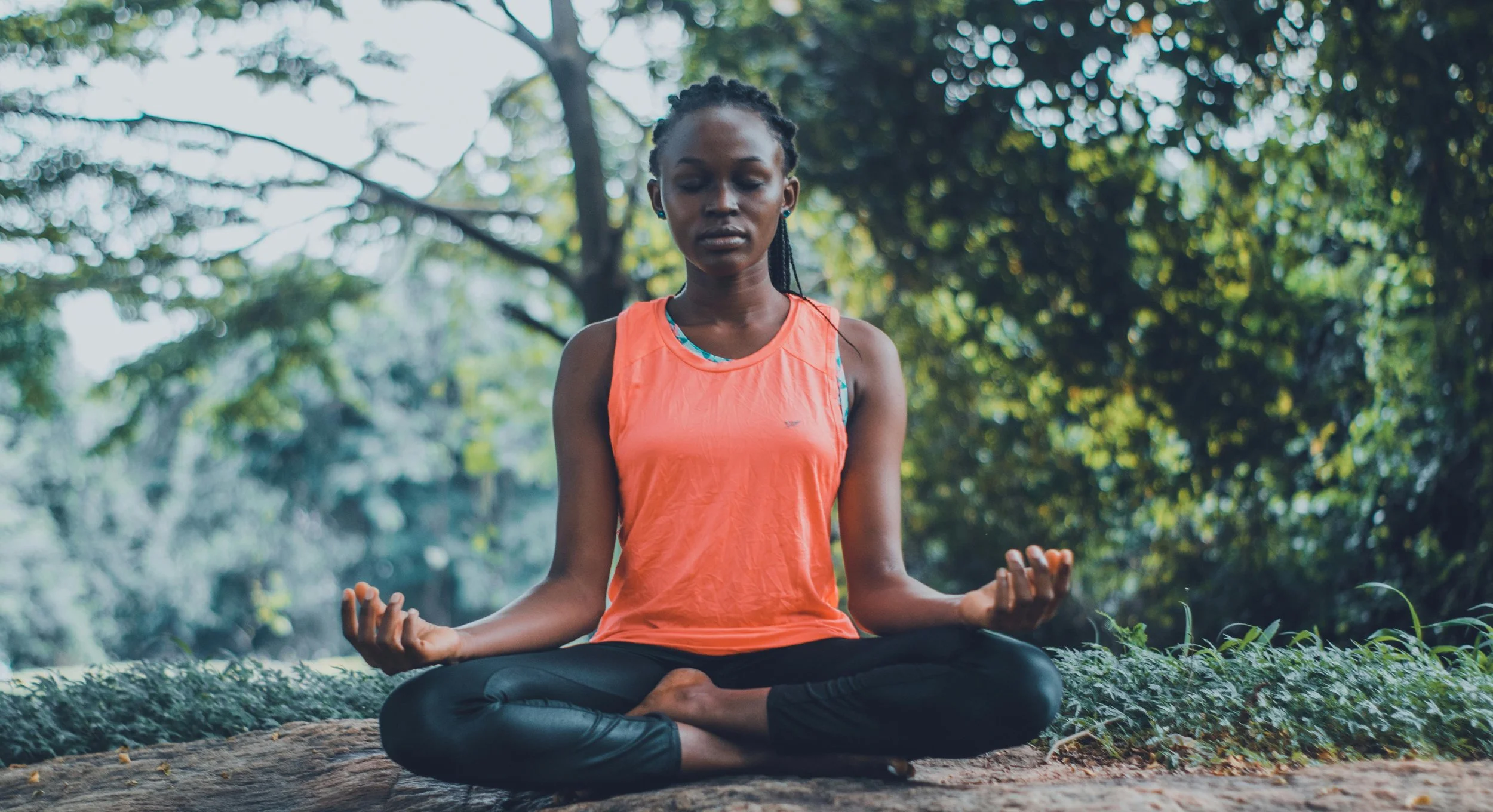
Who Can Practice Anapanasati?
I’ve often heard it said that this practice is best reserved for experienced meditators. While I understand the sentiment and think it can be overwhelming for new meditators, I think beginners can at least start their practice. No matter how new one is, they can start with the steps.
Those experienced in anapanasati practice may develop deep concentration, states of absorption, and insight. Beginners will cultivate mindfulness, concentration, and begin to understand practice more clearly. Many beginners stick with the first tetrad for a while until they are able to effectively feel the sensations of the second.
Structure of the Discourse
Before jumping into it, a note on the structure. The sutta contains 16 steps, often broken up into four tetrads. Each tetrad corresponds to one of the four establishments of mindfulness, and they are traditionally worked in a sequential order. Some teachers argue they need not be in order, but I believe they should be worked sequentially.
I will not reproduce the actual text in full here. A good translation into English can be found here, or in Bhikkhu Analayo’s aforementioned book. My intention is to offer a basic understanding for practice here. One note is that every step in the sutta does mention both breathing in and out. For practical purposes, I shortened the steps when I list them.
The First Tetrad
The first tetrad focuses on the body, the first establishment of mindfulness. The steps are:
Breathing in and out long
Breathing in and out short
Breathing sensitive to the entire body
Breathing calming bodily fabrication
Long and Short Breaths
I have heard some teachers explain that the focus on long and short breaths is an encouragement to be with the breath from the beginning all the way through the end. Bhikkhu Analayo argues that we might be called to notice the difference between the two types of breath. We often have longer breaths when we first start sitting, and breathing becomes shorter as we settle and calm the mind.
The instruction here is to collect our awareness on the breath, watching the whole breath through. I personally use the sensation on the tip of my nose, but I know other teachers who recommend the sensation of the breath in the belly. This is up to you; I do not have a strong opinion on what is “correct.”
Sensitive to the Entire Body
As the attention settles on the breath, we open up to the sensations in the entire body. This points toward anapanasati as not just a concentration practice. We are not just keeping our attention narrow and on the breath. We feel the entire body as we breathe. This is very clearly mindfulness of the body, the first establishment of mindfulness.
Calming Bodily Fabrication
Once we have established mindfulness of the entire body, we invite relaxation into the body. For me, this often comes as a gradual sense of ease. We don’t need to force the body into calming. It is more of a softening. Remember we are to keep the attention also with the breath as we do this.
The Second Tetrad
This second tetrad focuses on feeling tone, and arises once we have calmed bodily fabrications.
Sensitive to joy
Sensitive to pleasure
Sensitive to mental fabrication
Calming mental fabrication
Sensitive to Joy and Pleasure
The Pali words here are piti and sukha, respectively. Piti is often translated as joy, rapture, or bliss. I follow Bhikkhu Analayo’s perspective, which is to use the pleasant feeling tone of resting in the present moment with the breath as the jumping off point. Piti can arise a number of ways, including tingling sensations, a rush of energy, and/or brightness even with eyes closed.
Sukha is the opposite of dukkha, or suffering. It can be understood as pleasure, much less energetic than piti. Whereas joy is often exciting or stimulating, joy is more peaceful and comfortable. My understanding of the instruction here is to allow these two qualities to arise, and to watch the change in experience while anchored in the breath. You might notice how piti and sukha are related and fluid.
Sensitive to Mental Fabrication
Much as we did with the body in the first tetrad, we are asked to tune into the overall experience of mental fabrication here. In the context of the AnapanasatiSutta, this is understood to mean feeling tones and perceptions. Specifically, you might tune into the different feeling tones of joy and pleasure as they arise, pass and change. You notice the subtle emotional shifts and reactions of the mind.
Calming Mental Fabrication
Again like the previous tetrad, we now calm the mental fabrication like we did with the bodily fabrications. Again, this is not a forceful calming. It is a gentle relaxation of feeling tone and perceptions. As we do this, we find less “turbulence” as the mind settles out and becomes more unified.
The Third Tetrad
The third tetrad focuses on citta, or mind. This is not the thoughts or perceptions, but the actual state and quality of mind itself. This correlates with the third establishment of mindfulness.
Sensitive to the mind
Gladdening the mind
Concentrating the mind
Liberating the mind
Sensitive to the Mind
Much like we did with the body or mental fabrications, we breathe in and out experiencing the mind. At this point, the mind is relatively still and calmed, and we can see the overall state of mind clearly. You might notice if the mind is concentrated, scattered, dull, bright, etc. Remember that this is mindfulness directed at the mind, not the individual thoughts.
Gladdening the Mind
Gladness sometimes is a precursor to joy and pleasure in other contexts. Here, it seems to refer to an even more subtle and peaceful form of pleasure. As we’ve calmed mental formations and found some stability in the mind, we tune into the gladness that is naturally present.
Concentrating the Mind
This is where states of absorption really come into play with this practice. Bhikkhu Analayo makes the point that this step is a collection of body, mental formations, and mind into one experience. We collect the attention onto the breath, mindful of the state of concentration. The gladness we just saw helps build tranquility and we are able to concentrate relatively easily here.
Liberating the Mind
There are plenty of different interpretations in various traditions of what this step means. My understanding is that the instruction is ot liberate the mind from the five hindrances. As we do so, the meditation can feel quite effortless and spacious. In my experience, we may lose perception of time or space during this step.
The Fourth Tetrad
The final tetrad correlates with the fourth establishment of mindfulness, and focuses on dhammas, or phenomena.
Contemplating impermanence
Contemplating dispassion
Contemplating cessation
Contemplating letting go
Contemplating Impermanence
We should be seeing impermanence to some degree throughout the previous twelve steps. Here, we specifically breathe and pay attention to the impermanent nature of experience. We might notice the impermanent nature of the breath, feeling tones, thoughts, and the overall mental state.
Contemplating Dispassion
In this step, we recognize the dispassion or detachment that comes from deeply knowing impermanence. We don’t need to cultivate detachment intensely. Instead, we notice how detachment comes naturally. We cease clinging and grasping as impermanence becomes clear, and pleasant and unpleasant experiences lose their pull.
Contemplating Cessation
This is another one that has a ton of interpretations. My understanding is that we contemplate the cessation of conditioned things such as craving and clinging. We might take it to literally mean noticing the end of breaths or a thought as well. From a deeper perspective, contemplation of cessation is recognizing how dispassion causes a ceasing of suffering.
Contemplating Letting Go
Finally, we have contemplation of letting go. This is a recognition that once we experience impermanence, dispassion, and cessation, we no longer cling to anything. This may specifically point toward the idea of anatta, or not-self. It’s often associated with higher states of absorption, and is a felt sense (not an intellectual knowing) of this concept.
My Experience and Suggestions
First, I want to note that anapanasati practice has perhaps been the most powerful practice in my personal experience as a meditator. It took me many years to really come to an understanding of it and give it a real shot. Again, I recommend Bhikkhu Analayo’s book. It’s rather dense, but he gives the best explanation of the practice in my opinion.
If you are reading this post and these steps and completely lost, don’t worry. You’re not alone. There’s a lot of foundational Buddhist concepts in there, and it’s not the easiest thing to understand at first. If you are a true beginner to meditation practice, I recommend starting with the first tetrad.
Some teachers will offer the first tetrad as a standalone teaching. I understand the purpose of this. But the practice is really offered as a whole. However, you can start with the first tetrad no matter how early on in practice you are. As you develop mindfulness and concentration repeatedly in this way, moving through the next steps will come naturally.
If you want to investigate the Anapanasati Sutta and want support, I am here to support you. I personally found my way through this practice with the help of a teacher, and absolutely love investigating it with my students. You can reach out to me any time for a free consultation.
To stay connected, join the free WhatsApp group. The group is a place to ask questions, discuss mindfulness, find meditations, and get links and topics to the weekly sitting group. You can join the group for free at OneMindDharma.com/chat.
More Posts




Matthew Sockolov is a Buddhist meditation teacher who trained at Spirit Rock Meditation Center in Woodacre, California. Completing the Dharma Leader training program in 2017, Matthew was given power to teach in the Insight Meditation tradition by Jack Kornfield, Kittisaro, Thanissara, and others. You can learn more about Matthew here.