Mindfulness for Beginners: A Guide to Getting Started with Meditation
Mindfulness is about paying attention to the present moment without judgement. Although the idea may seem simple, if you’re new to mindfulness and meditation you might feel unsure of where to start.
It’s completely normal to have doubts, questions, and curiosity. This guide is here to help you understand mindfulness more clearly. We’ll cover some of the basics of mindfulness, its benefits, doubts and questions, myths, and how to actually get started.
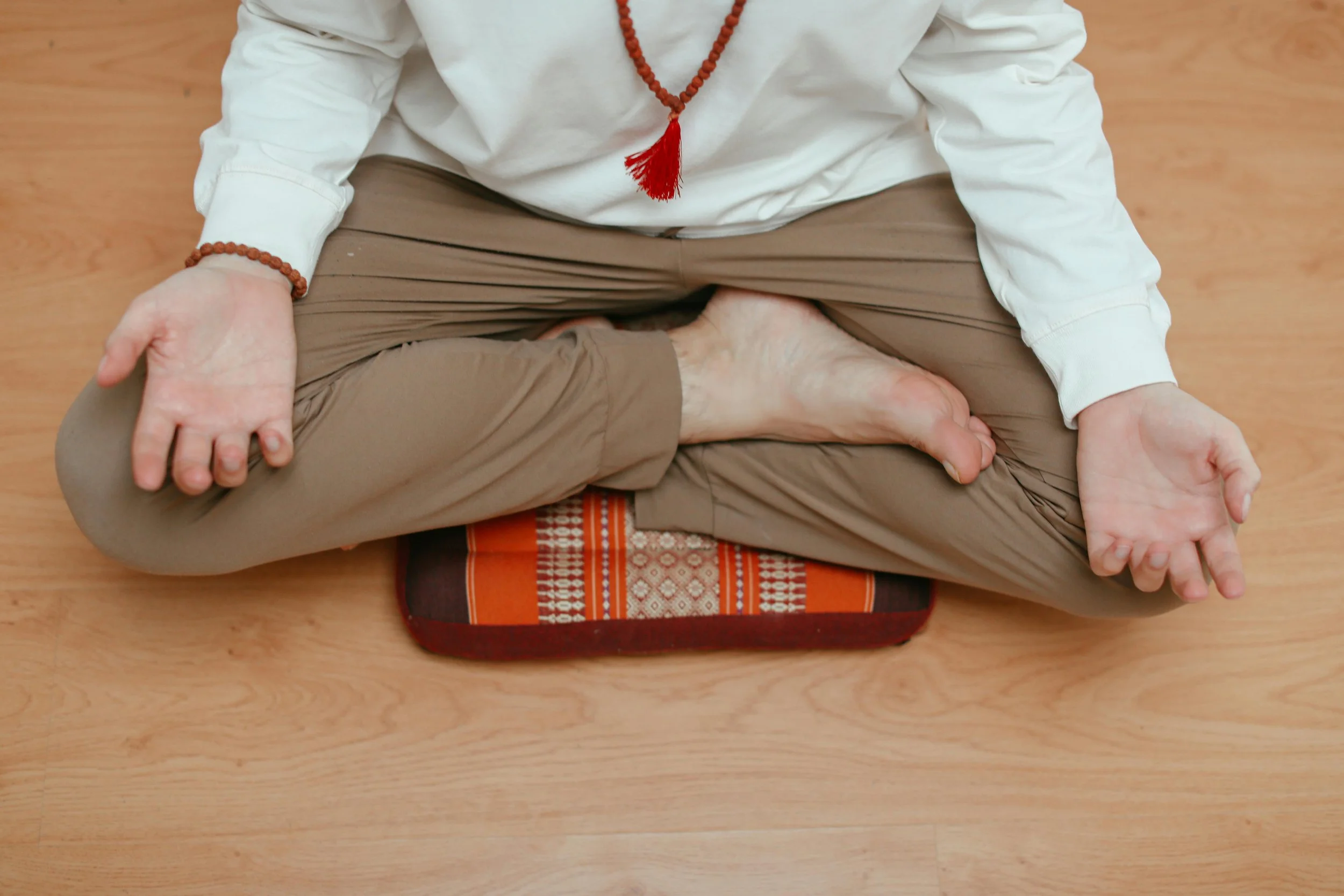
“Mindfulness means gently paying attention, recognizing what we are experiencing, and knowing whether it is causing suffering or moving us toward freedom.”
What is Mindfulness?
These days, mindfulness often means being present and aware, but this is really only part of it. The term mindfulness in English comes from the Buddhist practice of sati. In the context of Buddhism, mindfulness is not just being present.
Mindfulness really has two pieces. The first is a non-judgemental awareness of what is happening in the present moment. This may be any experience, such as the body breathing, thoughts arising, or an emotional experience.
The second piece of mindfulness is a recognition of the causes and consequences of the experience and how we respond. Think about it like this: if you notice you are experiencing anger, mindfulness also means recognizing that the anger causes harm to both you and others.
Mindfulness is a quality we cultivate through various practices. With mindfulness meditation, we train the mind in awareness of our experience from moment to moment. We can also cultivate this quality in everyday life (more on this later).
I have an episode of my podcast that covers mindfulness a bit more entitled Mindfulness for Beginners: What is Mindfulness? that I recommend checking out! You can also read my post Mindfulness and Concentration: Complementary Qualities to understand the difference and relationship between mindfulness and concentration.
Benefits of Mindfulness
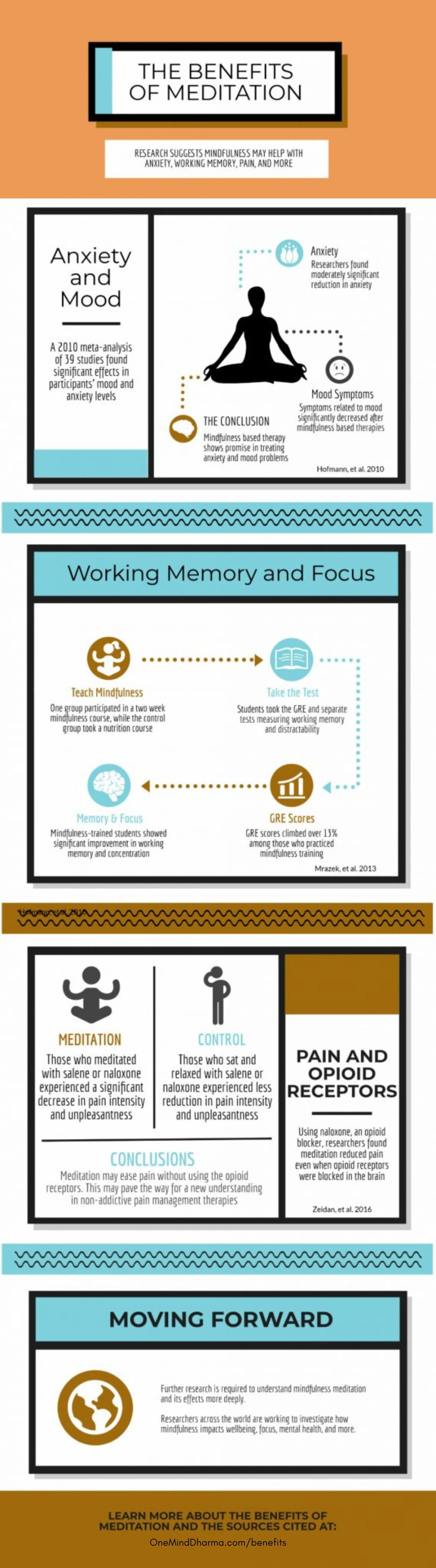
People come to mindfulness for various reasons. You may want to reduce some stress or anxiety in your life, increase your focus and concentration, or improve your sleep. The good news is that mindfulness can support our wellbeing in many different ways.
I cover the benefits of mindfulness here, looking at various research studies investigating mindfulness and meditation practices. Some benefits include:
Reduced stress and anxiety
Regulation of mood and mood disorders
Decreased symptoms of PTSD
Improved sleep quality
Improved self-esteem
Boosted creativity
Better problem-solving
Decreased feelings of loneliness
Better digestion
Mindfulness is not a cure-all by any means. But it is a powerful tool to have in your arsenal. In my own experience as both a meditator and a teacher, mindfulness generally can help support us through any situation or experience.
Common Beginner Questions
Over the years teaching students new to meditation, there are a few questions that seem to arise consistently. These are all good questions. If you have a question not answered here, please reach out.
You can also join our online meditation group to practice in a supportive setting with other meditators.
How Do I Stop Thinking?
This is probably the most common question I receive from those interested in mindfulness and meditation. Brace yourself for the answer: you don’t need to clear the mind to meditate! A clear mind free of thoughts is absolutely not needed or even suggested for meditation. To learn about why the mind thinks (especially during meditation), check out my post Is It Normal to Think During Meditation?
Thinking is part of experience. Even those with ADHD can meditate. Instead of seeing it as an obstacle to practice, invite it in as part of your practice. We can be mindful of the thoughts just as we can be mindful of the breath or anything else. Watch the thoughts come and go, and remember the importance of non-judgement.
Do I Need to Close My Eyes?
In many traditions in Buddhism and secular meditation practices, we do close our eyes to meditate. However, other traditions like Zen, Trataka, and Tibetan Buddhism often meditate with open eyes.
I generally recommend meditating with the eyes closed as it minimizes stimuli. But some people feel more comfortable with their eyes open, and that’s absolutely okay. You can read my post here for more on meditating with eyes open or closed.
Am I Meditating Correctly?
Another valid question, I think this one arises because sitting and simply observing experience can feel aimless in moments. The truth is that mindfulness is about watching what is arising when it arises. We sometimes want to over-analyze it or overcomplicate it.
“Correct” meditation is observing our experience from moment-to-moment. You can read my post Am I Meditating Correctly? for more insight. If you’re unsure of what you should be doing, you can listen to guided meditations to help keep you on track. I recommend checking out my playlist of 10 Minute Guided Meditations for a good start.
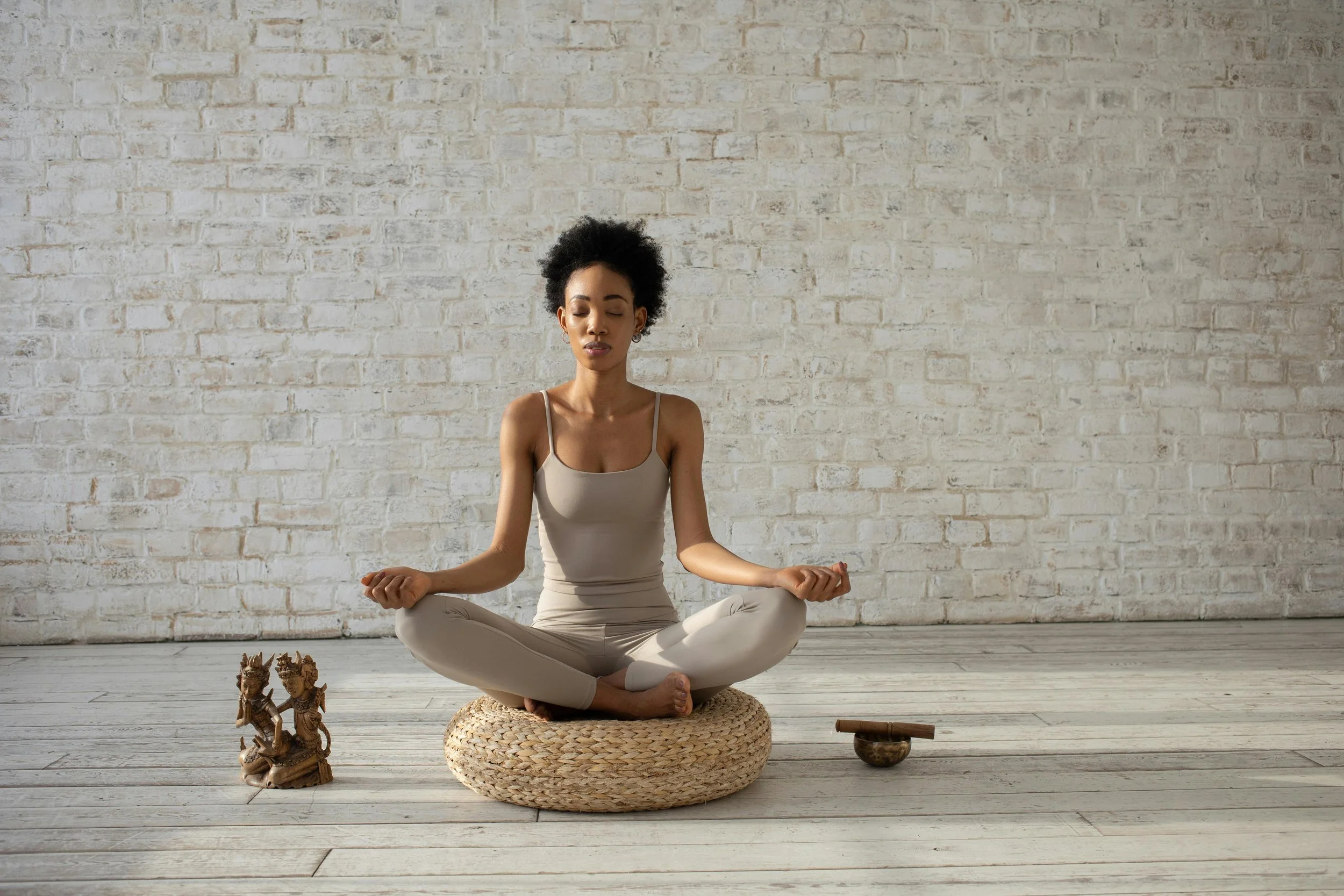
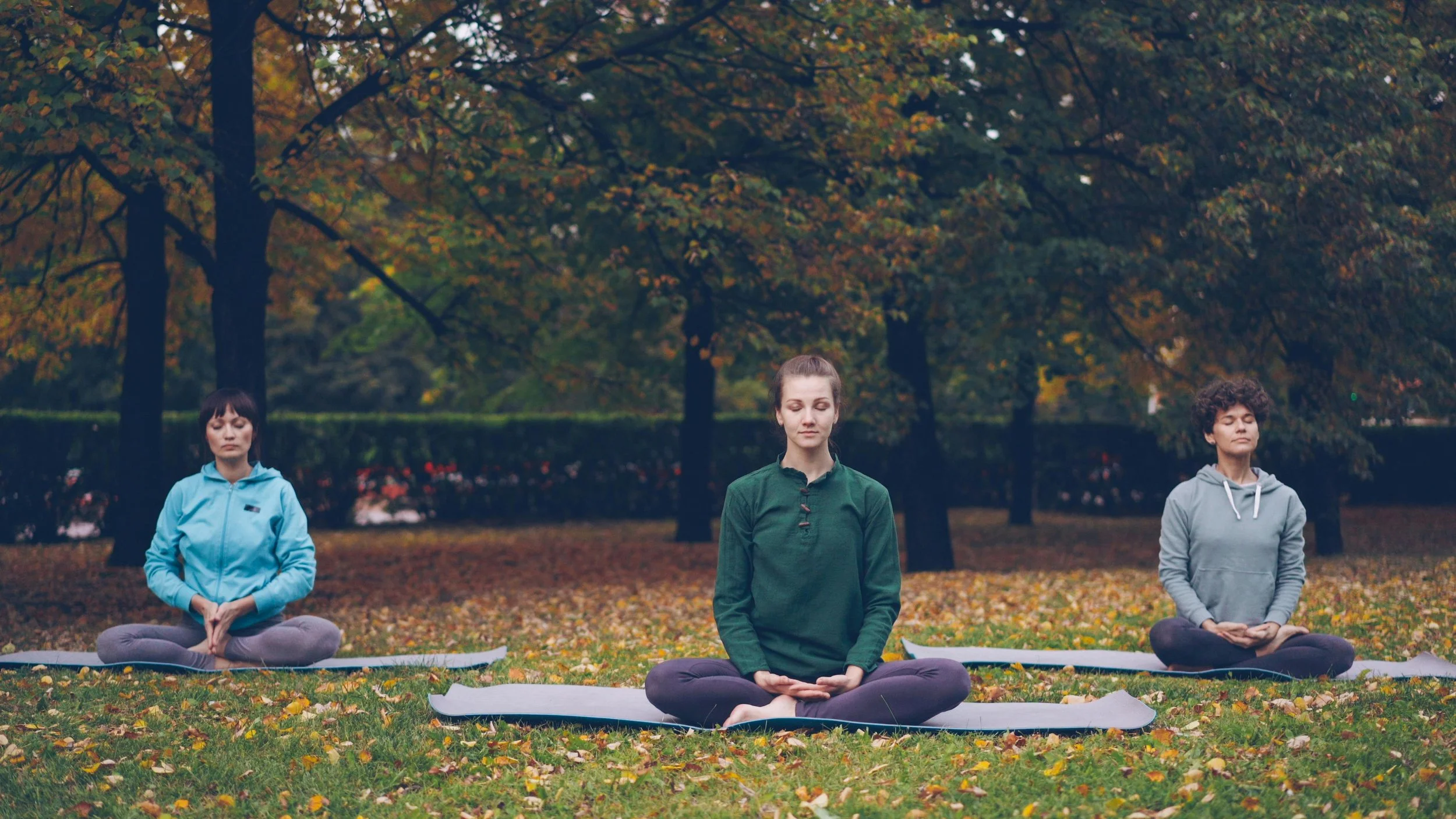
On this note, it’s also useful to remember there is not one correct meditation posture. You don’t need to sit cross-legged or in full lotus to meditate. To meditate “correctly,” sit however is comfortable and conducive to practice. I recommend checking out my post Do You Have to Sit Cross Legged to Meditate? for more information.
For How Long Should I Meditate?
Many guided meditations come in at around 30 minutes. However, when just starting to practice, this probably isn’t wise. We need to build up to longer meditation periods, and not overdo it. Trying to sit for too long can cause a lot of discomfort and difficulty in those new to mindfulness.
I often recommend meditating for just five minutes to my new students. Make it approachable for you. You want your meditation to be doable and not overwhelming. You can build up to longer periods as you progress. Read more in my post How Long Should Beginners Meditate?

How Often Should I Meditate?
This is a question that I hear from nearly every new student eventually and I’ve covered in a post here. The answer is one that is clear in my opinion: daily. Multiple studies have found that frequency of meditation is a better indicator of wellness and benefits than length of meditation (https://www.jmir.org/2023/1/e43358/, https://pubmed.ncbi.nlm.nih.gov/40785526/, https://pmc.ncbi.nlm.nih.gov/articles/PMC10883600/).
This goes with my personal experience. Meditating regularly is much more helpful than meditating for longer periods but less frequently. As such, my recommendation is to meditate regularly. Focus less on the length of the meditation and more on the consistency to see the strongest benefits. You can read my post here to learn more about the benefits of meditation and how long it takes to see them.
Struggles Beginners Often Face
We all face some struggles with mindfulness and meditation practice. There are a few issues beginners commonly come up against. Remember that these are normal experiences and meditation is often hard at first!
Feeling Restless or Anxious
When we go to sit in silence and quiet, anxiety and restlessness may arise. This is especially common in those with anxiety or stress in general, but may happen to anyone. Often when we stop outside stimuli, sensations like these may arise.
If the anxiety or restlessness is manageable, we can continue meditating and make it part of our practice. Be mindful of what is happening in the mind and body. Get to know the anxiety, and tune into it with acceptance and curiosity. This takes time, but with practice we can train the mind to respond with kindness to these experiences.
Feeling Tired or Lethargic
On the other end of the spectrum is tiredness or lethargy. Like restlessness this is one of the five hindrances, a set of mental states that often arise in practice and hinder our concentration and mindfulness. Where restlessness is too much energy, lethargy may be not enough energy.
There are many things you can do with sleepiness during meditation. You might try opening your eyes, trying walking meditation, or adjusting your posture. You also might consider outside conditions impacting your energy during meditation, such as quality of sleep, diet, and other factors that may impact energy.
Over-Analyzing
We may have a tendency early on in our meditation practice to constantly analyze our experience. For me, this comes up as a desire to “figure out” something. It may be to remember a teaching, understand a thought pattern more clearly, or do meditation just right.
One thing I recommend to my students who find themslves over-analyzing during meditation is to set aside time for this. If you meditate for five minutes, give yourself an additional two minutes at the end to analyze. When you notice the analytical mind activating during meditation, press pause and revisit it after your period of meditation.
Self-Judgement
This is a unique difficulty in that students often don’t explicitly state they are struggling with self-judgement. Rather, I hear it in how they share their experience. Whether it’s an active mind, some thought pattern, or a physical discomfort, it’s met with some judgement or story.
Much like any other experience, we can watch this mindfully. Be mindful of what story you’re bringing to each experience you’re having, and remember that kindness is an essential part of mindfulness. I think curiosity in meditation is the best antidote to judgement.
Not Having Time
Finally, many newcomers to mindfulness feel that they just don’t have time to meditate. It can be difficult to carve out extra time in our already busy schedules. This is one of the reasons I recommend starting with shorter periods!
We can specifically set aside time in our schedule for meditation. Wake up five minutes earlier, and make meditation a part of your routine. You also might try incorporating more mindfulness practices in everyday life if you just cannot find the time to sit. I recommend checking out my post How to Find the Time to Meditate if you’re struggling to fit in practice sessions.
Practical Tips for Beginners
I could probably write forever on mindfulness tips for beginners, but here I will cover a few of the most important and practical ones. For a bigger list, visit my page 14 Meditation Tips for Beginners.
Start Small
I already said this, but it bears repeating. Start small! Don’t set a thirty minute timer and wonder why meditation feels like a chore. Begin with just a few minutes a day. I repeat this constantly because I think it is one of the most useful things we can do when starting a mindfulness practice.
Listen to Guidance
Whether you are meditating or looking to incorporate more mindfulness into your daily life, there are plenty of free resources out there to guide you. With guidance, we are able to have some instruction and direction with our practice rather than feeling like we are wandering aimlessly.
If you want some good jumping off points, check out my list of my favorite mindfulness podcasts. You might also look on YouTube, or on the meditation app Insight Timer! I have a list of some of my favorite YouTube channels here. To read about the pros and cons of guided and silent meditation, read my post Guided Meditation vs. Silent Meditation: Which is Right for You?
Sit Comfortably
You don’t need to sit in a full lotus posture to meditate. Find a position in which you are comfortable. You might read some suggestions, but posture is personal. Investigate what is conducive to your personal practice, and let go of any ideas of the “right” posture you may have.
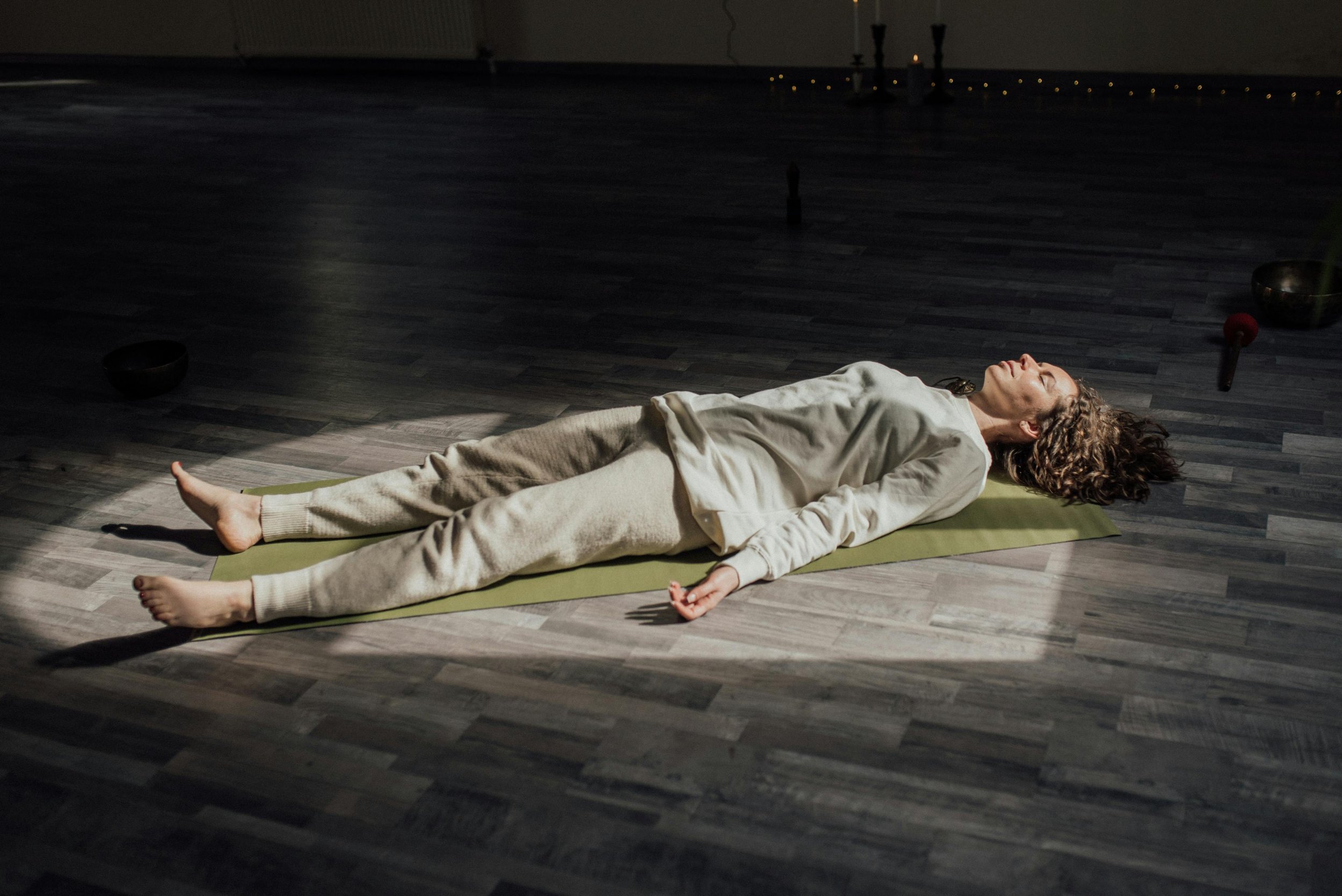
My general guideline is that you want to sit in a way that works for you. For most, this means sitting in a way that invites in both relaxation and some alertness. Lying down can induce sleepiness, and being too rigid can make relaxation quite evasive.
Build a Routine
Finally, try to build a routine. Having a regular routine helps immensely in building a new habit. When we create a routine with our mindfulness practice, it becomes a part of our days and easier and easier to do.
To do this, I recommend sitting at the same time every day in the same place. I realize this isn’t necessarily doable for everyone, but try as much as you’re able. You also might try sticking with a similar or the same practice to really get used to the routine.

Myths & Misconceptions
There are many myths and misconceptions about meditation and mindfulness that I hear frequently. Sometimes it’s a new student, and sometimes it is someone socially mentioning something. Here are a few of the most common myths I hear.
You Need to Clear Your Mind to Meditate
I’ve already touched upon this. People say they cannot meditate because they aren’t able to clear their minds. I respond that if you were able to clear your mind on command already, you probably wouldn’t really need meditation very much!
We simply don’t have that much control over the mind. You do not need to clear the mind at all to meditate. Instead, you can aim to be mindful of the mind! Watch the thoughts and allow them to be present. Don’t let an active mind prevent you from meditating.
Mindfulness is Religious or Spiritual
Mindfulness certainly comes from Buddhist teachings. I won’t argue here whether Buddhism is a religion, philosophy, or way of life. But mindfulness on its own is not religious. Compassion is a part of the Bible. Is compassion religious?
In fact, one of the lovely things about mindfulness to me is that it is intensely pragmatic and rooted in reality. There are many purely secular forms of mindfulness practice, most notably MBSR. We need not take on a new set of religious beliefs to practice!
We Must Sit Still
Yes, ideally we can learn to sit still in meditation practice. But we cannot expect this right off the bat. If you feel the need to move, adjust your posture, or scratch an itch during meditation, don’t write the session off as a failure in any way (well, don’t do this ever anyway).
It’s okay to move or make adjustments during meditation. Try to do so mindfully. For example, notice the itch in your body. Notice the reaction in the mind of wanting to be rid of it, and the intention to scratch. Then, move your arm and hand mindfully as you scratch.
Meditation is Peaceful
When we look from the outside at somebody meditating, it looks quite peaceful. Furthermore, teachers and monastics generally seem calm and at ease. However, this doesn’t mean every meditation session is some peaceful state of bliss.
Sometimes we sit with a chaotic mind, heavy emotions, or strong urges. It takes time to build calm and tranquility in meditation, and even then we still are subjected at times to the reality of the mind. It’s okay if it does not feel peaceful; that does not mean something is wrong.
Meditation is a Cure-All
I obviously am a huge fan of both mindfulness and meditation. They have helped me in so many ways in my life. But neither are a cure-all. It’s important to seek professional help if you’re struggling deeply. Mindfulness can be a part of your recovery plan or support toolbox, but does not substitute for modern medicine, professional support, social support, or any of the many other ways we can support our wellbeing.
Mindfulness = Meditation
I’ve talked quite a bit about both here, but mindfulness and meditation are not the same thing. Mindfulness is one type of meditation, and meditation is one way we cultivate mindfulness. But they are not the same thing.
I mention this because there are many ways we can cultivate mindfulness outside of meditation practice. We don’t do ourselves any favors by meditating every day, then being completely unmindful the rest of the day.

Mindfulness in Everyday Life
On that last note, it can be helpful to practice mindfulness in our lives off the meditation cushion. We build continuity in this way, continue our cultivation, and begin to bring mindfulness to real world situations and interactions.
One of my favorite ways to do this is with mindfulness reminders, or awareness triggers. It’s a great mindfulness practice for beginners and experienced practicioners alike, and something we can do every day.
To work with awareness triggers, you simply pick something that happens regularly. It may be the sound of your phone ringing/vibrating, going from seated to standing, or taking a sip of water. Try to pick something that happens multiple times throughout the day.
Whenever your trigger happens, use it as an opportunity to be mindful. You might feel the breath in the body, the overall experience in the body, the thoughts arising, or the emotions present. By doing this, we are training the mind to be present and aware during the day.
To investigate bringing mindfulness to everyday life, check out my Practicing MIndfulness online course. This six-week course dives deeply into how we can begin to cultivate mindfulness and compassion in our lives outside of meditation.
Getting Started with Mindfulness
So, you’re interested in mindfulness but not quite sure where to begin. How do we actually get going with mindfulness practice? The simple answer is to start meditating! Take into account all of the tips and thoughts offered here, and get going.
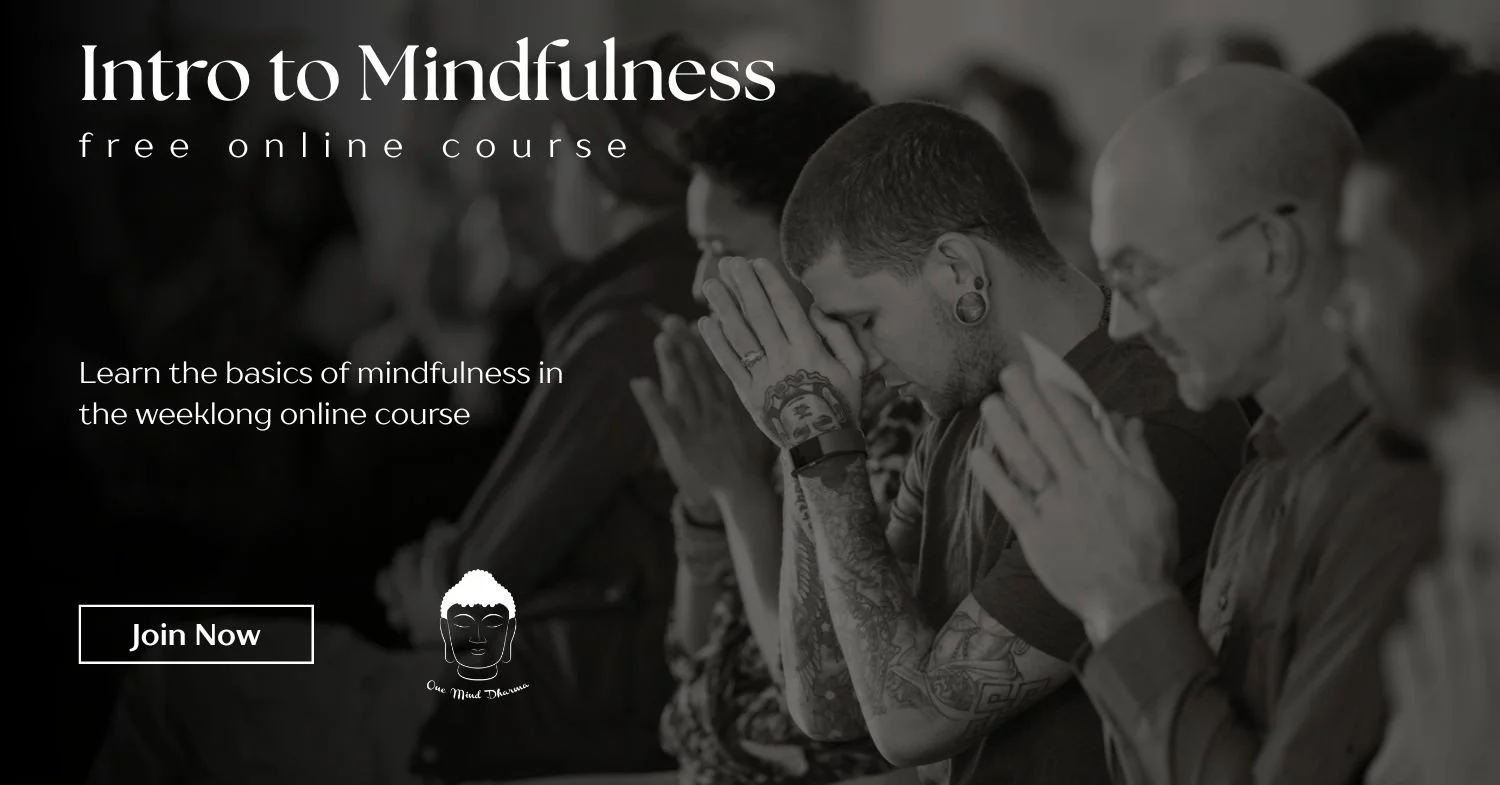
If you want a structured way to sit, you can join our free 30 Day Meditation Challenge or my free Intro to Mindfulness Course to get started. Don’t forget you can always reach out to me at Matthew@TheMindfulCounselor.me with any questions! The challenge is available either via email or on YouTube.
I also have a weekly meditation group that is completely donation-based. This means you can join for free every week to sit with me and the community. This is a great place to ask questions, connect with a meditation community, and learn from each other.
If you want to listen to more teachings about mindfulness and meditation, give my podcast a listen. With almost three million downloads, it’s a popular podcast that explores many aspects of mindfulness both as it relates to meditation and daily life. You can learn about mindfulness coaching here.
More Posts



Matthew Sockolov is a Buddhist meditation teacher who trained at Spirit Rock Meditation Center in Woodacre, California. Completing the Dharma Leader training program in 2017, Matthew was given power to teach in the Insight Meditation tradition by Jack Kornfield, Kittisaro, Thanissara, and others. You can learn more about Matthew here.