9 Common Myths & Misconceptions about Meditation
I have heard so many misconceptions about meditation and mindfulness over the years. The myths about meditation are pervasive, and prevent many people from really getting into meditation practice. Here, I hope to dispel some of these myths and offer clarification so that you can understand meditation and mindfulness more clearly.

Common Myths & Misconceptions
I could certainly go on and on about the various misconceptions and myths surrounding meditation. I’ve listed nine here that I hear fairly regularly. Sometimes I hear them from new students, or sometimes from an acquaintance who finds out that I teach meditation.
You Must Clear Your Mind
This is by far the most common misconception about meditation in my experience. I’ve written about it in my post Do You Have to Clear Your Mind to Meditate? as well as a few talks on the podcast. Being able to clear your mind in order to meditate would make meditators very few and far between.
It can be difficult or uncomfortable, but we don’t need to stop thinking during meditation. As I cover in my post Is It Normal to Think During Meditation?, the brain’s default mode network activates during periods of rest like meditation. This means the thinking mind kicks on, making it completely typical for thoughts arise during meditation.
I have a few practices and talks below that cover working with thinking mind, but I recommend checking out those two posts I mentioned for more tips and ideas.
Mindfulness of Thoughts
Rather than making the act of thinking such a problem in our practice, we can actually use the thinking mind to cultivate mindfulness. This practice is known as mindfulness of thoughts, and can help us to get to know and understand the thoughts and processes of mind more clearly.
Mindfulness of Mind
This is a 17 minute guided meditation looking at the mind overall, not specific thoughts. We look at the way the mind responds to experience, either leaning toward or away from it. It’s a great way to get to know the thinking mind and practice with mindfulness of mental states.
Mindfulness of Mental States
If you were wondering what I meant by “mindfulness of mental states,” then here you go! I have a talk here from my podcast where I cover the third foundation of mindfulness, which is mindfulness of mental states. Mental states differ from thoughts in that we’re looking at overall states rather than individual thoughts. It’s a foundational mindfulness practice, and one that works well with an active mind!
Building Concentration
Of course, we can also work to build concentration and still the mind. However, this takes time and effort. We aren’t expected in any way to be able to clear the mind. Concentrative meditation helps us build the ability to focus on the object of our awareness without distraction. It’s not that thoughts don’t arise, but we aren’t as concerned by them. You can read my post Concentration Meditation: Techniques, Common Difficulties, and Tips for Practice for more information on concentrative meditation.
Meditation is About Relaxing
To be fair, this isn’t entirely a myth. Meditation can be quite relaxing, especially when we reach deeper states of concentration. But it doesn’t need to be relaxing. We should not tie the “success” of a meditation session based on how relaxing it was or not. In fact, we shouldn’t assess our practice in general either based on relaxation.
For many, if not most, meditation can feel hard at first. If you find sessions of meditation to be difficult and/or uncomfortable, there’s nothing wrong with you. We must be careful with expectations. Be present with what is happening, however your experience looks. If you find yourself comparing your experience to your expectations, note that and leave it be!
You Must Sit Correctly
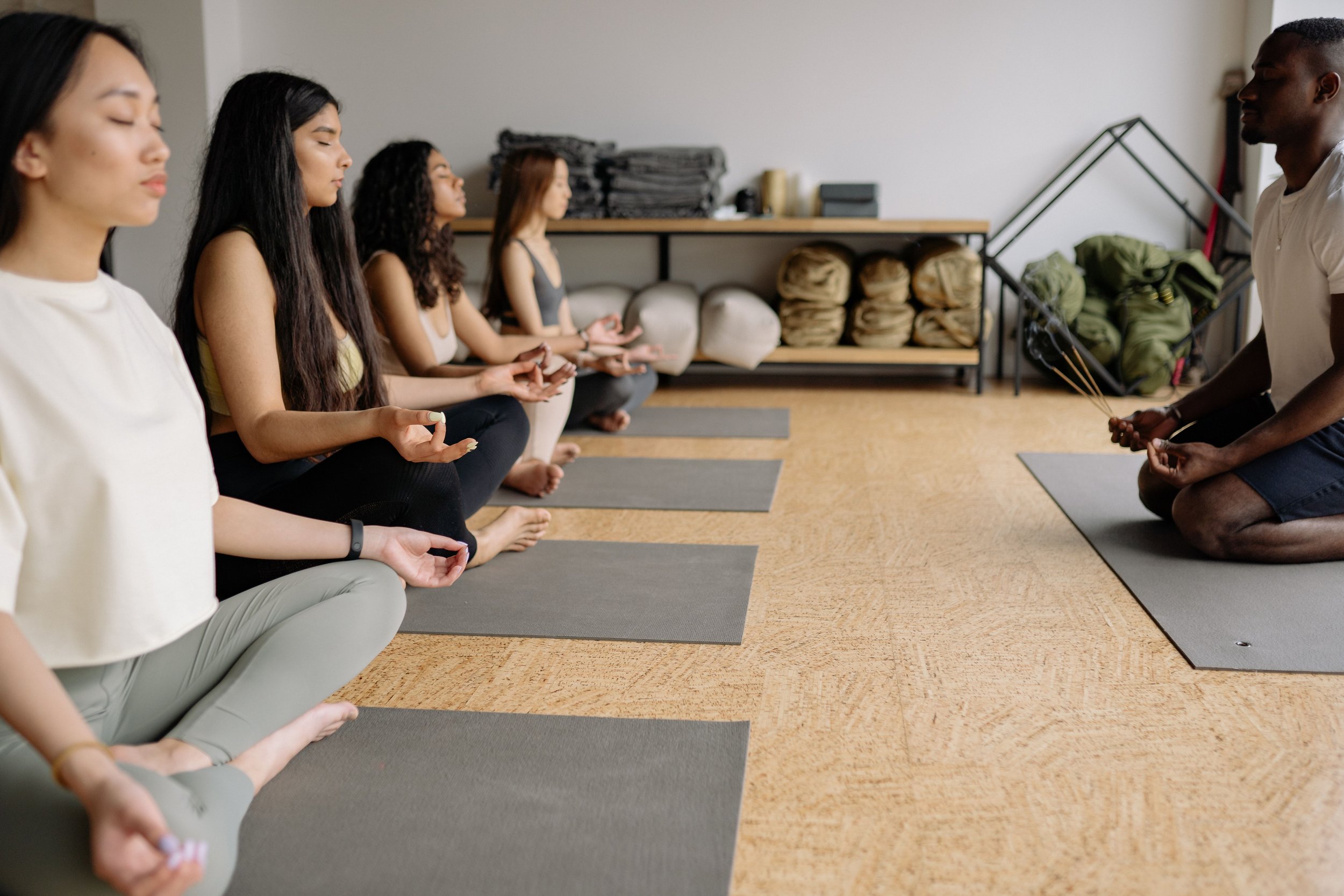
This is a misconception that is perpetrated by media I believe. Go to a search engine and image search “meditating.” Most people will be sitting in a lotus or cross-legged position. Although this position tends to work well for most people, it’s not necessarily the correct way to meditate for everyone.
I have a whole post about if you have to sit cross-legged to meditate here, but the simple truth is that you don’t. You should sit in any way that feels comfortable for you and conducive to your practice. It may be cross-legged, it may be sitting on a chair, or it may be not sitting at all!
There are many forms of moving meditation, such as walking meditation, yoga, qigong, and tai chi. Although sitting meditation certainly serves a purpose, it is important to remember we can meditate in any posture. Beyond the idea of sitting in the correct posture, we don’t even need to sit to truly meditate.
You Need Thirty Minutes a Day
I could use any amount of time with this one, because it just does not really matter. If you have five minutes a day to give to meditation, great. It can be hard to find the time to meditate, so do what works for you. Yes, longer periods do carry some benefits such as the deepening of concentration and insight. But shorter periods give us the opportunity to build consistency.
Consistency in meditation, in my opinion, is more important than length. There’s research to support this, as I cover in my post For How Long Should Beginners Meditate? By focusing on frequency rather than duration, we give ourselves the opportunity to create a lasting habit. And some of the aforementioned research found that just five minutes a day is enough to produce noticeable benefits.
Mindfulness Means Accepting Everything
I have heard this misconception in several ways. Sometimes it is said that mindfulness is just accepting everything. I’ve also heard that mindfulness makes us passive as we accept whatever life has in store. To some degree, acceptance is a part of meditation. In better terms, non-resistance is a part of mindfulness meditation.
The issue I take with this is that we don’t have to accept everything in meditation. We do accept that something is present, but that doesn’t mean we just allow it to be there. For example, if you notice anger is present, mindfulness isn’t just watching it. We also must know what gives rise to the anger and how to let go of it. We even might respond with a counter, such as loving-kindness.
Meditation Must Be Nonjudgemental
This is again a half-truth, much like the previous myth. We are taught repeatedly to observe non-judgementally. If judgements arise, we are to notice them. However, we also must use what the Buddha called discernment.
This is a form of judgement, is it not? Discernment is the ability to wisely judge and recognize. Going back to the example of experiencing anger, we absolutely must discern that it doesn’t serve us. It causes suffering to ourselves, and when we lash out it causes suffering to others. Sure, we don’t beat ourselves up in traditional judgement, but we do use our wisdom to discern that anger is not skillful.

Meditation Can Treat Anything
I love meditation. I sit twice a day nearly every day, and it has helped me with so many parts of my life. It has supported my recovery from addiction and depression, strengthened my relationships, and supported my wellbeing when it comes to exercise and diet. However, it’s not the panacea that some people claim it to be.
Meditation and mindfulness can be incredibly valuable tools to have in your toolbox. A consistent practice, in my opinion, lays a solid foundation for insight and understanding. But some issues may require other work. We can’t rely on meditation to fix us without addressing other parts of our lives.
For people experiencing intense levels of anxiety or stress, therapy may be supportive. Outside factors are also important, such as diet, exercise, social support, sleep quality, etc. I am a big believer in the power of meditation, but I don’t think we can expect it to “fix” us without looking at our experience holistically.
Meditation is Religious
I have directly been told more times than I can count that someoen can’t meditate because they already have another religion. I’ve also been told that meditation is a sin. I must admit that I have some Jewish family and went to Catholic high school, and have no idea where the idea that meditation is problematic comes from. But, I have to address it.
Meditation does not need to be religious at all. Programs like MBSR (mindfulness based stress reduction) are 100% secular. There are no gods, spiritual or religious practices, or anything of the sort. You can practice meditation or mindfulness without engaging with any religion, including Buddhism.
As for Buddhism, I’m of the mind that whether or not it is religious is up to you. In many traditions, Buddhism is quite religious. There are talks of deities, many rituals, and holy places. In the West, Buddhism is much less religious. It is often described more as a philosophy or way of life.
I also think it’s important to note that while meditation can absolutely be secular and non-religious, it also can be religious. Meditation is a part of many religious sects like Sufism in Islam, Kabbalah in Judaism, and Ignatians in Catholocism. On the secular side you’ll find basic mindfulness meditation, MBSR, and therapeutic modalities such as MBCT (mindfulness-based cognitive therapy).

Meditation = Mindfulness
Meditation and mindfulness are sometimes used synonymously, which is simply not accurate. I have an episode of my podcast here where I talk about what mindfulness is, as I think many people new to the practice don’t quite understand it. Meditation is certainly one way we can cultivate mindfulness, but we can also learn to practice mindfulness in everyday life.
On the flip side, there are many forms of meditation other than mindfulness. As the previous section mentioned, there are forms of meditation in some religions that have nothing to do whatsoever in mindfulness. Even in Buddhist and secular meditation circles, you’ll find meditations on other things than mindfulness, such as forgiveness, loving-kindness, appreciative joy, and equanimity.
Getting Started with Meditation
To get started with meditation with a good understanding can be difficult. We have to find a path or practice that calls to us, learn what works for us, and dedicate time and energy with patience. I have a few resources that can be helpful when beginning to investigate mindfulness and meditation.
A great way to start is with my free Intro to Mindfulness online course. This weeklong course covers the basics of mindfulness, how to practice, and how to build a regular practice. It’s crafted with beginners in mind, and aims to give you a solid start to your practice!
I also have a course based on my bestselling book available here on my website. Practicing Mindfulness is a six-week course that is truly aimed at beginners. It’s focus is not just on meditation, but on bringing mindfulness to everyday life. It also covers a variety of topics, and contains short meditations and practices to do during the day.
Finally, check out my page Mindfulness for Beginners: A Guide to Getting Started with Mindfulness. You’ll find an explanation of mindfulness, answers to common questions, techniques and tips, and guided practices to give a try.
More Posts



Matthew Sockolov is a Buddhist meditation teacher who trained at Spirit Rock Meditation Center in Woodacre, California. Completing the Dharma Leader training program in 2017, Matthew was given power to teach in the Insight Meditation tradition by Jack Kornfield, Kittisaro, Thanissara, and others. You can learn more about Matthew here.