Do You Have to Sit Cross-Legged to Meditate?
Finding a posture for our practice is perhaps one of the most foundational things we can do. But many of us can’t get into the lotus position we see represented so much. So, do we need to sit cross-legged to meditate, in lotus position, or in a specific way?
Sitting Meditation Posture
Let’s start by recognizing this question is in relation to sitting meditation. It is probably the most common way we practice meditation, and what you likely think of when you think of someone meditating. Although the full-lotus position is depicted most commonly, it simply is not the best or correct posture for everyone. It’s one of the most common meditation myths that we need to sit in this way in order to meditate.
Finding a Good Sitting Posture
To find the right sitting posture, it can be helpful to recognize what the purpose is. A posture should support our practice, encouraging mindfulness, alertness, wisdom, and kindness. As such, we should sit in a way that feels comfortable, energized, and relaxed at the same time.
Generally what this looks like is stacking the spine, lifting upward. This invites in energy. We can then relax the abdomen and shoulders around the spine, inviting in some ease. Make sure you’re as comfortable as possible, as we want to avoid any unnecessary discomfort in the body. Of course we can’t avoid all discomforts during meditation, so don’t set unrealistic expectations
Now, do we need to sit cross-legged on the floor or a meditation cushion? No. You can sit any way that you can find to keep you spine upright. It may be flat on the floor, on a cushion, on a couch, on a chair, etc. Let go of the idea of the “right” way to sit, and focus instead on what feels useful for you and your practice.

Other Meditation Postures
Any conversation about correct meditation postures must include other ways we can meditate. Although we think of sitting as the traditional posture, we really can meditate in many different positions. The Buddha himself recommended this, and if you spend time at any monastery you will see that there are other ways to practice other than sitting meditation.
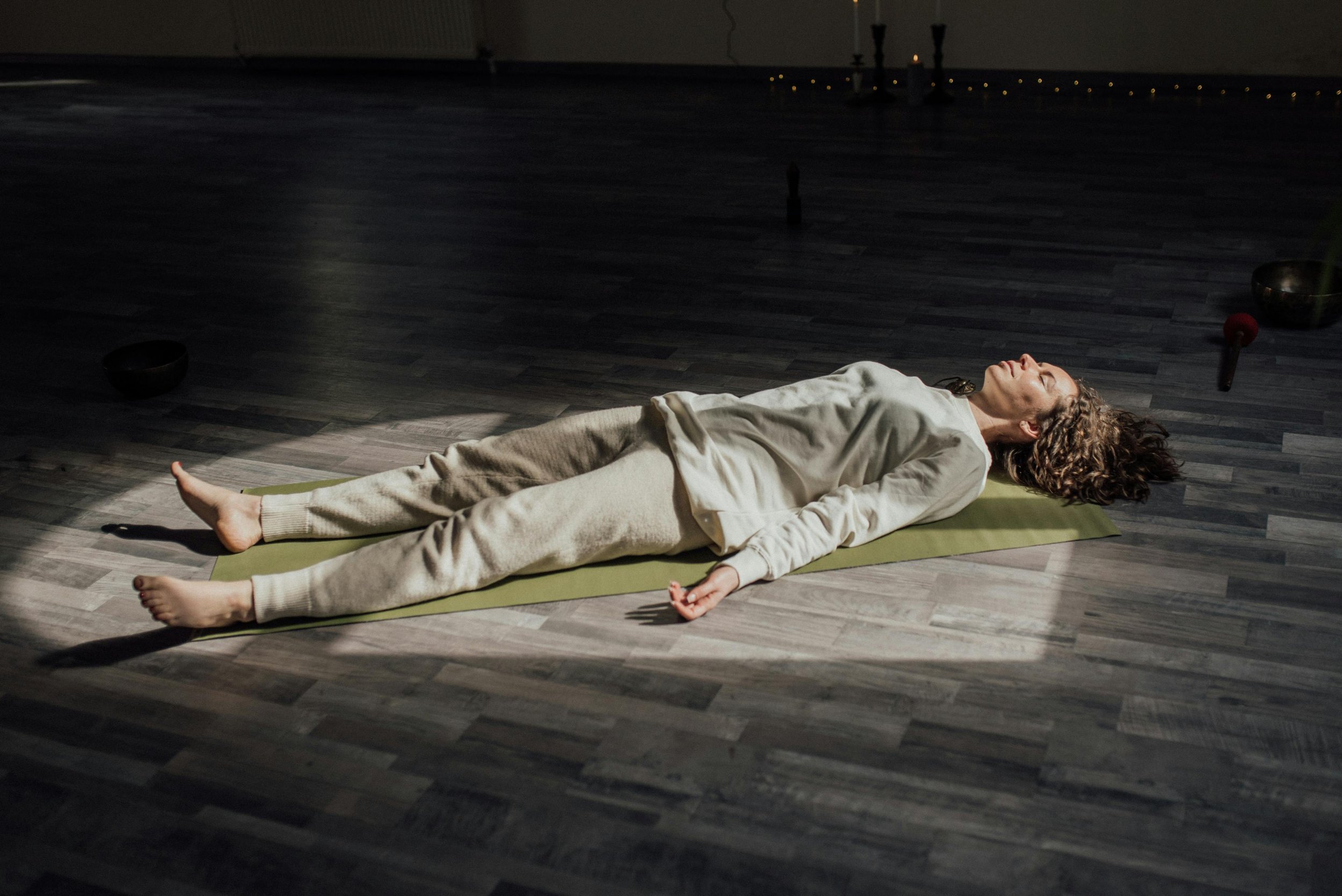
Meditating Lying Down
To be transparent, I am not personally a fan of meditating lying down. I almost always fall asleep, which I suppose could make it useful for insomnia for me! But we can indeed meditate lying down. I have many students who exclusively meditate lying down in fact. For many, this is simply a more comfortable posture.
I think lying down may lend itself to specific practices especially, such as body scanning. If you are meditating to relax or aid with sleep, lying down is a great way to go. Furthermore, we can have a few moments of mindfulness in bed before we get up and before we go to sleep.
Standing Meditation
I remember the first time I went on retreat and saw people doing standing meditation instead of sitting meditation in the hall. It was quite the sight. Standing meditation is a great alternative to sitting. It can help with sleepiness during meditation or restlessness. It also can help us bridge the gap from formal meditation into daily life.
Walking Meditation
I love walking meditation, and have been doing it daily recently. It’s an integral part of monastic life, and something I think more meditators should incorporate into their practice. It’s a great way to meditate in a different posture, with the body on the move. It’s applicable to daily life as we are often walking during the day and can bring mindfulness to the experience.
I often recommend walking meditation for people who experience anxiety during meditation or who feel anxious after meditating. Sometimes the movement of the body can help us work through the energy of stress and worry in a different way than sitting still.
Movement Practices
There are many other ways to practice moving meditation. Practices like tai chi, qigong, and yoga are great examples. These are meditative practices that actually work with a moving body and the energies created. I strongly recommend incorporating some movement practices at some point, as we spend a fair amount of time on the move. It can help us connect with our bodies and the present moment in a whole new way.
Learning More About Meditation
If you’re interested in learning more about meditation and getting started building a practice, I recommend checking out my page Mindfulness for Beginners: A Guide to Getting Started with Meditation. You’ll find tips, techniques, guided practices, and answers to common questions.
You can also sign up for my free Intro to Mindfulness online course. It’s a week long, and offers an understanding of the basics of mindfulness through various guided meditations and talks.
More Posts


Matthew Sockolov is a Buddhist meditation teacher who trained at Spirit Rock Meditation Center in Woodacre, California. Completing the Dharma Leader training program in 2017, Matthew was given power to teach in the Insight Meditation tradition by Jack Kornfield, Kittisaro, Thanissara, and others. You can learn more about Matthew here.