How to Stop Reacting in Arguments: A Mindful Guide to Responding Instead of Reacting
Have you ever said something in an argument only to immediately regret it? Of course you have, because we all have. This automatic reactivity is something we all deal with in some way or another. We get defensive, go on the attack, and/or say things we don’t mean.
With mindfulness, we can learn to stop reacting in arguments and give ourselves a little bit of space to respond. Sometimes all it takes is a brief moment to give us an opportunity to choose how we respond and not cause harm. Rrecognizing what is happening with mindfulness gifts us an understanding and this space to respond with more wisdom and clarity.

Reacting vs. Responding
There’s a big difference between reacting and responding. When we learn to respond rather than react, we create a choice in how we engage. Reactions are fast, often automatic and emotionally driven ways to engage. They are rooted in conditioning, ego, fear, and a fight-or-flight response.
Responding, on the other hand, is a slower and more intentional way to engage during an argument. It is rooted in awareness, and gives us the power of choice. Where a reaction comes automatically without much conscious input, a response is a slower and conscious choice.
Let’s take an example. You and your partner are having a discussion and they begin raising their voice and speaking in a way that is harsh, not landing, or not okay with you. A reaction may be something like, “Do not speak to me like that!” in a likewise raised voice. A response may be something more clear and productive, such as a calm, “I can see you’re upset, and I hear you, but I think we need to slow down as this tone is not working for me.”
The reaction can actually escalate things. Often, the escalating of an argument is actually just a back-and-forth of reactions raising the level. When we respond, we put a pause on this escalation and can substantially slow down the intensity of arguments. Easier said than done, but that’s the goal here: to learn to respond.
Understanding Why We React
One step in learning how to stop reacting in arguments is to recognize the potential factors that may be at play. It varies from couple to couple, but generally a few things may influence how fast we react. These are not to offer excuses, but to gain an understanding so we can work with them. When we touch these parts of experience with mindfulness, we can begin to work with them (more on this later).
The Nervous System
Frankly, one of the biggest causes of reactions in arguments is simple nervous system activation. This can be tied in with other factors on this list as well. The brain’s emotional center, the amygdala, processes stimuli significantly faster than the rational center in the prefrontal cortex.
This can lead to a fight-or-flight response at times. Before we even have a chance to process what is happening with our rational brains the amygdala takes the reins and handles it, often in a way that causes more harm than good. This is often the cause of that quick reaction where you say or do something before you even realize what you’re doing.
The Second Arrow
One factor that may be at play is the idea of the second arrow. This is a Buddhist teaching that pain is inevitable, but suffering is optional. This plays a role when we experience the discomfort of an argument. Maybe you’re just simply uncomfortable, maybe you feel vulnerable, or maybe something harmful is said.
When we experience this pain, we compound it by resisting it. Instead of just acknowledging it hurts, we resist this reality. This doesn’t mean we have to accept hurtful things being said to us. It means we can recognize that something hurts. Instead of denying it, we own it. When we do deny it, we often seal off the pain by lashing out with reaction.
Ego
The ego of course plays a role in nearly every argument between partners. It can lead to reactions when we feel attacked or want to be right. We stop considering the other person’s feelings and our deeper intentions to care for our relationship as our brain focuses completely on our own identity and protecting the ego.
Conditioning
Many different types of conditioning can increase the chances of reaction during arguments. We may have learned communication behaviors from childhood or past relationships or traumas playing a role. We can’t change our pasts, but we can bring mindfulness to how they may be impacting our future.
General Stress
Stress in general can lead to reactivity. Research has shown this repeatedly. And stress can arise in a number of different ways. We may be hungry, tired, overworked, exhausted emotionally or physically, sick, or struggling with a mental health disorder. We all are subjected to stress in some way or another, but it may impact how quick we are to react.
Manipulation
Finally, some people may manipulate a situation to actually induce reactions and escalations. This may be a conscious manipulation or a non-conscious pattern. This can be useful to recognize. Sometimes we (or our partners) escalate arguments as a way to actually avoid them. By escalating, we avoid actually having the hard discussion and just scream our way out of it.
Mindfulness Practices to Stop Reacting
Enough about the problem. Let’s focus on some solutions. These are all mindfulness-based practices you can use during arguments to help you create the space to respond.
Anchoring in the Body
The body is always with us, and offers a way to get out of our thoughts for a moment. Much research, including a 2018 systematic review, have found that working with the breath can engage the prefrontal cortex, aiding in rational decision making. It also can increase heart rate variability (HRV), which gives the body an increased ability to deal with stress.
A good place to start with this is with some breath counting. Take a moment during your argument to count a few inhales and exhales. When we do this, we anchor in the sensation of breathing in the body, engage the parasympathetic nervous system, and may be able to create space to respond rather than react.
Body Scan for Tension
Another form of anchoring in the body is the mini body scan. Take a pause during an argument to scan through your body looking for tension. It’s one of my favorite mindful grounding exercises. This definitely takes less time than it seems on the surface, so don’t be too overwhelmed.
Try it right now while reading this! Pause, and look through your body for any tension. Check common places like the neck and shoulders, lower back and abdomen, and jaw. Just by bringing mindfulness to the body and releasing tension in this way, we can make an impact on that fight-or-flight response and bring some ease into our experience.
Naming What’s Happening
This is a practice that comes directly from mindfulness meditation. It’s one of the things I frequently offer in mindful couples counseling, as it’s so simple and useful. The idea is to simply name or note what is present. You might do this out loud, or in your head during an argument. When we name what’s happening, we actually both recognize what is happening and put some distance between ourselves and the emotion.
For example, you might note “anger is here.” When you feel the anger growing, recognizing it like this gives you an opportunity to be mindful and present with what is happening, rather than simply allowing the emotion to control your behavior. You might even say out loud to your partner, “I feel angry.” For more ideas on letting go of anger, I recommend reading my post How to Let Go of Anger: A Mindfulness-Based Approach.
Choosing Curiosity
Curiosity is an important aspect of both mindfulness and any work we do on ourselves. With arguments, it’s a great way to be mindful of others and ourselves at the same time. We can replace thoughts about being right or “winning” the argument with some curiosity. What’s really going on here? What needs are not being met? What are both you and your partner feeling in this moment.
To take it a step further, try actually speaking with curiosity. You might ask your partner what they are feeling, if they have any needs that aren’t being met, or what they need in this moment. Curiosity, by its very nature, is the opposite of ego-driven reactions. Try to ask genuine questions to see how the conversation can turn around.
The Silent Sandwich
Finally, I want to offer the silent sandwich. This is a practice in wise speech, and one that can make an immense difference when it comes to reacting in arguments. To do this, you will generally need to both agree to use this technique. If you can do so, it can transform the way arguments play out.
The silent sandwich has two periods of silence as the bread, and some speech as the filling. So before anyone speaks, agree to take a few deep breaths or have five seconds of silence. Once the person finishes speaking, you add another few deep breaths or period of silence to the end. This can dramatically slow down conversations, giving us some reprieve from the reactions and allowing us to respond with more wisdom and intention.
Practices Outside Arguments
In addition to the practices to use during arguments, I think we can benefit from working with reactivity in everyday life. In general, learning to practice mindfulness in everyday life is a great way to better our relationships and communication. We can set ourselves up for the best possible outcome when it comes to difficult discussions.
Regular Meditation
I have to start by recommending some regular meditation practice. By practicing mindfulness every day, you prime your brain to tend toward awareness and response rather than reaction. To find some tips on starting a meditation practice, I recommend reading my post How to Start a Daily Meditation Practice: Tips and Guidance for Beginners.
In addition to mindfulness, I recommend incorporating some loving-kindness practice for both yourself and your partner. Cultivating loving-kindness allows us to bring more kindness, gentleness, and patience to the difficult moments. We become more focused on acting and speaking with love, and can steer clear of the reactivity.
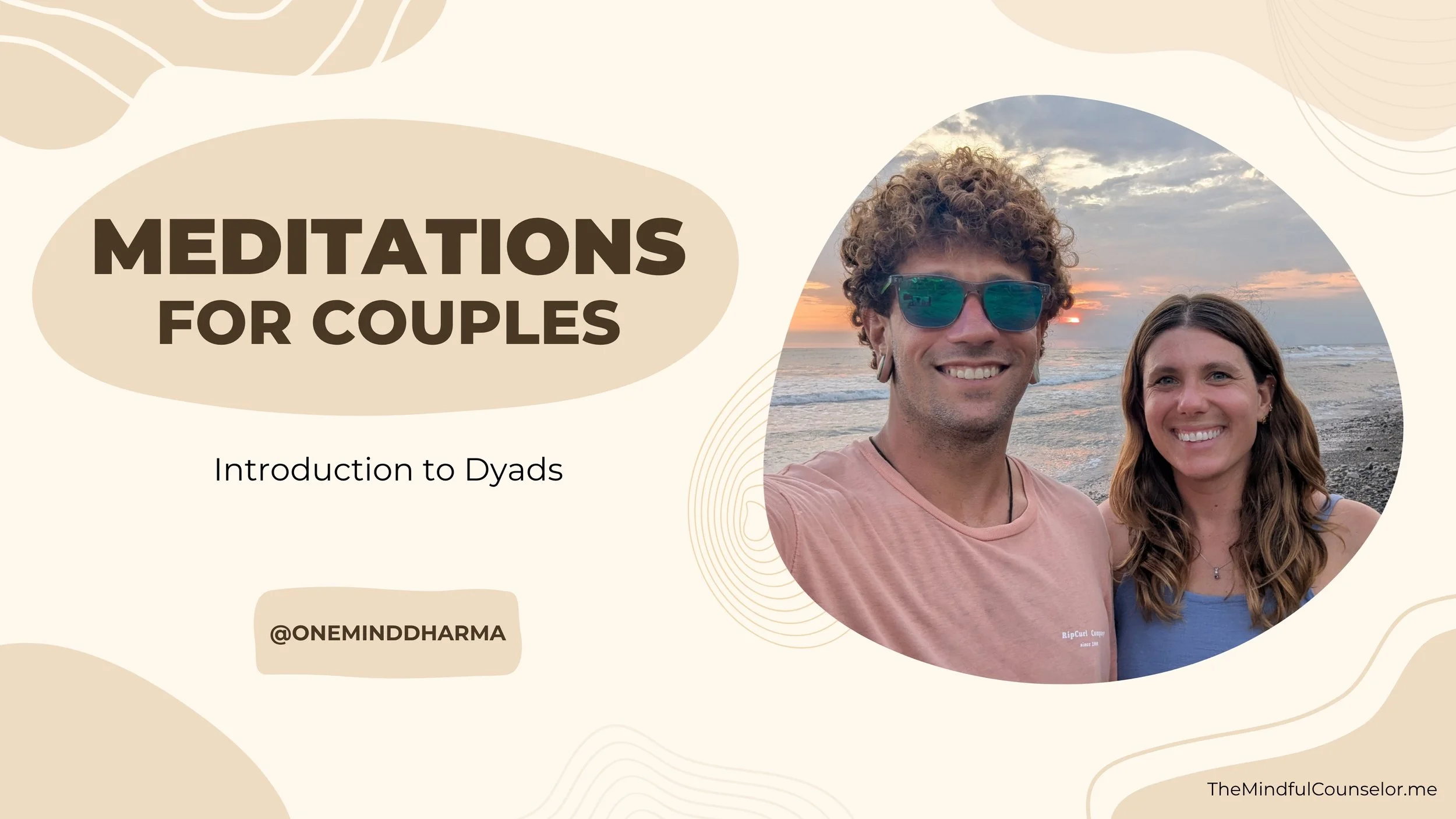
I’ve included below a guided loving-kindness practice for couples that I recommend, but you can also do this practice on your own.
Recognizing Triggers
We also might spend some time investigating what activates or triggers us. After an argument, we can reflect to see where exactly we fell into reaction and stopped thinking. You also might take some time out at night for some mindful journaling practices to investigate this question in general.
Knowing what causes the activation, we can be alert during arguments. If you know that you find yourself triggered when your partner brings up something from the past, be ready to respond if it happens. When they bring up the past, recognize that it’s often a trigger for you. Take an extra deep breath, a longer pause, or a break from the conversation.
Mindful Preparation
With some awareness that a conversation may be triggering, we can prepare ourselves. You might take a few minutes to meditate or focus on the breath before these conversations, offer some silent phrases of loving-kindness, or do whatever makes you feel at ease and calm. By going into the conversation or situation with the most peace, you give yourself the best chance at wise and kind responses. You also might work to forgive yourself after the fact if things go south.
Mindfulness Practices for Couples
Finally, I highly recommend some mindfulness practices for couples. These can be a great way to connect, learn to communicate mindfully, and foster honesty and vulnerability. I recommend reading my post Couples Meditations: Building a Conscious, Connected Relationship for some guided practices you can do together. I also have a page here with some mindfulness activities for couples that aren’t strictly meditation-related.
And I am here of course to support you in bringing mindfulness to your communication and relationship. You can reach out to me here for a free consultation to see if we’d be a good fit together.
Finally, we do offer a four-week class series several times a year called Mindful Relationships. To sign up to receive notice when we next offer the class, enter your email address below.
More Posts





Matthew Sockolov is a Buddhist meditation teacher who trained at Spirit Rock Meditation Center in Woodacre, California. Completing the Dharma Leader training program in 2017, Matthew was given power to teach in the Insight Meditation tradition by Jack Kornfield, Kittisaro, Thanissara, and others. You can learn more about Matthew here.